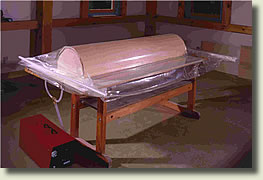
A rubberwood primer
Rubberwood's machinability and comparability to teak. January 31, 2001
Q.
Has anyone ever machined rubberwood? I am pricing a substantial quantity of rubberwood pieces and would like to know how tooling holds up, how the wood holds up, if I need to climb cut, and any other tricks.
Forum Responses
Tooling holds up well. Birch is comparable for workability.
The rubberwood we usually see machines extremely well. But I've seen rubberwood in Asia which was either poorly dried or contained excessive tension wood. Many manufacturers there treat green rubberwood in enclave to avoid staining--I suspect this may effect quality of drying. I suggest you bid assuming no problems, but advise your customer that quality/yield/price may be affected if wood is found to have problems.
A second question was posted on this subject:
I am trying to choose rubberwood or teak for dining table and chairs. Can anyone compare these?
Plantation rubberwood is substantially cheaper than teak, which is restricted for logging. That's why rubberwood is widely used in Asia for manufacturing furniture and other wooden utensils, hugely supplying Europe and the Americas. Newly planted teak is not the same in appearance and quality as the hundred-year-old, rainforest-logged teak. Teak is one of the few species that is not affected by insects and weather, mold, etc.