Question
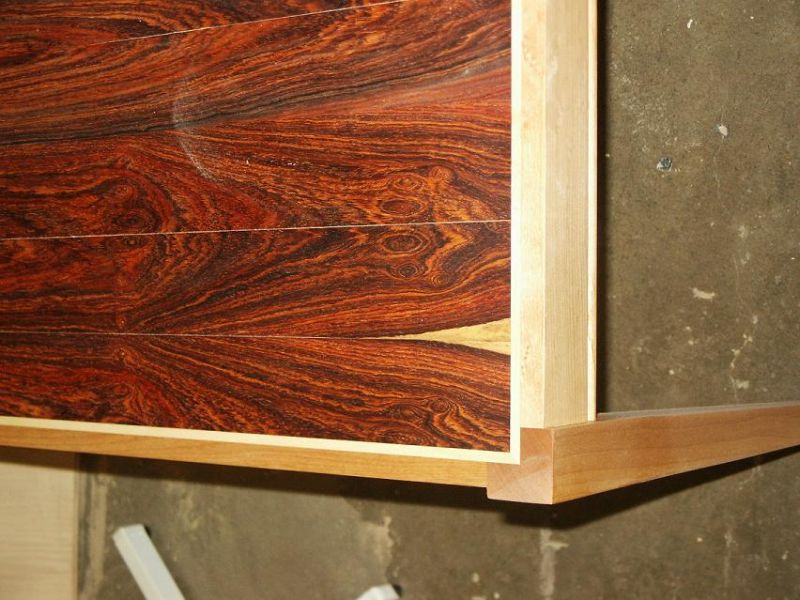
I was wondering if it is necessary to apply veneer to the back side of a panel when using 18mm fin-ply Baltic birch as a substrate. I'm using 10mil backed veneer. The parts are relatively small, 36" long max. Will my panels be unbalanced if I just leave the backside alone?
Forum Responses
(Veneer Forum)
From contributor A:
It doesn’t really matter what the substrate is. If you don’t veneer both sides, the panel will get pulled hollow by the unbalance. Someone could have a special situation where the panel was going to be glued to something very rigid and would be held straight.
I don’t see any chance of making the part over size cutting down on bowing. It is however a standard practice to make them oversize before pressing. The extent that a part will bow is relative to its dimensions. I don’t understand your resistance to veneering both sides though. If the veneer is a really precious or rare wood you can use a veneer of lesser value on the flip side. It is only a rule of thumb that both sides must be the same species.
We make every effort to do this but there are many situations that just do not work out – for example, expensive materials and the need to use off cuts as available. The balance is most critical on thinner panels, less than 1" core. For 1" and above I'm less concerned with making a compromise.
You should have a good idea of the pull each wood has. It's ok to use Ash and cherry, but using maple and Anigre would not be so good. Often the problems do not show up until you build or even deliver the product. Another problem is that people do not let the panel completely dry before working with it. It takes many days in a 70 degree room to fully acclimate panels using PVA glue. They must be dead stacked for the entire time. UF glue is faster when hot pressing, but the same when using the water/powder product.
Many people on this forum seem to be doing small projects. I would suggest that the same on both sides should be the rule on any hand made high quality work. Ask your supplier for reject grade material, even burls etc. They often want to get rid of it. When it's all said and done, what is $20 worth of veneer on a major work?