Today's
Sponsors:


Pinske Edge

Pioneer Lumber Company

Planit Solutions

Porter-Cable

Preservation Solutions

Prime Estimating and Software Services, LLC

Primo Woodworking Machinery

Pro.Woodworker.com

Professional Machinery Group

Quality VAKuum Products, Inc.

Quickscrews International Corporation

QuickScribe

QuickWood, Inc.

QuikDrawers

R&R Drummond, Inc.

R.A.W.

RazorGage

Rex Lumber Company

Riethmiller Lumber

Ritter Manufacturing Inc.

Roberts WebForge, Inc.

Rockler Woodworking and Hardware

Roger Shaw and Associates

Rose Machinery

RouterCAD

RT Machine Co.

Safety Speed Cut

Sand-Rite Manufacturing

Sandman Products

Sawmill and Woodlot Magazine

SCM Group USA

Sears Trostel Lumber Co.

ShopBot

SII Dry Kilns

Silvaris

Simantech

SIS Machinery

SNX Technologies

South State Machinery

Southeast Tool, Inc.

Sovereign Machine, Inc.

Specialtytools.com

Speed Sander

Sprayguncaptain.com

Steve H. Wall Lumber Co.

Stiles Machinery

Stiles Shop Solutions

Super Source Tooling Inc.

Supergrit Abrasives

T-Tool USA LLC

Taghkanic CNC Services

TaylorCraft Cabinet Door Company

Techno CNC Routers

Oneida Air Systems

Onsrud Cutter

Opti-Sand

Optisol for Project Scheduling

Orange Aluminum

Original Saw Company

ORMA North America

Osborne Wood Products

Paragon Enterprises

Paul Cabinet Sourcing

Penn Sylvan International

People Logic Software Corp.


Black ash uses

      White ash, black ash, and their various uses. July 26, 2000

Question
I have some black ash logs. I know white ash is used for furniture and bats, but what is black ash good for, and does it air-dry well?

Forum Responses
Ash is divided into two groups -- white and black. The color is darker (browner) in black ash than in white ashes.

Black ash wood is 10 percent lighter in weight, meaning it is weaker, more limber, etc.

Black ash is a commercially sold wood and even though it is not as good as the white ashes, it is excellent for cabinets, furniture, etc.
Gene Wengert, forum moderator


Black ash is also a preferred wood for making splints for baskets. It separates easily on the annual growth rings.


The comments below were added after this Forum discussion was archived as a Knowledge Base article (add your comment).

Comment from contributor A:
Black ash has also been a demanded item in Japan, Tiawan and Korea for slicing veneer. It is very close to Japanese tamo. The majority and best quality comes from the upper midwest. First shipment went to Tiawan from Minnesota in 1984. Eastern markets have slowed since late 80's to mid 90's.


Comment from contributor B:
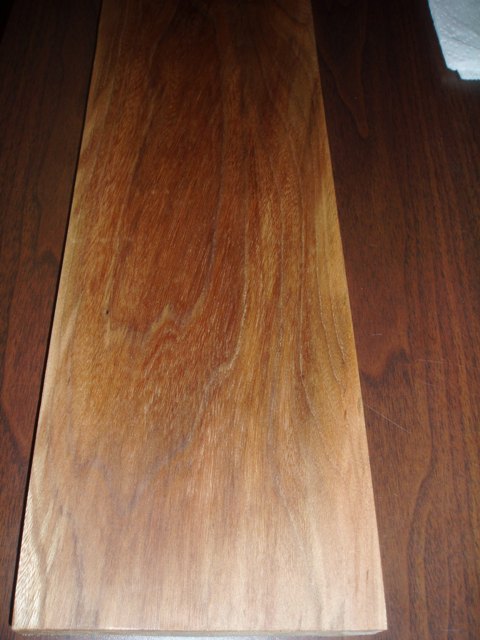
I have used tounge and grove, v groove black ash lumber as wall paneling, both vertical and herringbone pattern at a 45 degree angle, and as flooring. It is a beautful look. Every knot in a board means it will have a bend right at the knot, making a problem to fit together. It's worth the effort. Anyone can buy cedar or pine at the lumber yard. A black ash wall is a unique feature in a home. As to air drying, all I have used was air dried only. I nearly forgot our black ash bathroom cabinets, raised panel doors. I would like to use more of it.


Would you like to add information to this article?
Interested in writing or submitting an article?
Have a question about this article?


Have you reviewed the related Knowledge Base areas below?
  • KnowledgeBase: Lumber & Plywood: Wood Identification

  • KnowledgeBase: Wood Engineering: Wood Properties

  • KnowledgeBase: Knowledge Base


    Would you like to add information to this article? ... Click Here

    If you have a question regarding a Knowledge Base article, your best chance at uncovering an answer is to search the entire Knowledge Base for related articles or to post your question at the appropriate WOODWEB Forum. Before posting your message, be sure to
    review our Forum Guidelines.

    Questions entered in the Knowledge Base Article comment form will not generate responses! A list of WOODWEB Forums can be found at WOODWEB's Site Map.

    When you post your question at the Forum, be sure to include references to the Knowledge Base article that inspired your question. The more information you provide with your question, the better your chances are of receiving responses.

    Return to beginning of article.


    Refer a Friend || Read This Important Information || Site Map || Privacy Policy || Site User Agreement

    Letters, questions or comments? E-Mail us and let us know what you think. Be sure to review our Frequently Asked Questions page.

    Contact us to discuss advertising or to report problems with this site.

    To report a problem, send an e-mail to our Webmaster

    Copyright © 1996-2012 - WOODWEB ® Inc.
    All rights reserved. No part of this publication may be reproduced in any manner without permission of the Editor.
    Review WOODWEB's Copyright Policy.

    The editors, writers, and staff at WOODWEB try to promote safe practices. What is safe for one woodworker under certain conditions may not be safe for others in different circumstances. Readers should undertake the use of materials and methods discussed at WOODWEB after considerate evaluation, and at their own risk.

    WOODWEB, Inc.
    335 Bedell Road
    Montrose, PA 18801

    Contact WOODWEB


  •   Home » Knowledge Base » Knowledge Base Article