Outdoor Wood Table Ideas
Woodworkers kick around some design and construction details for a wood table that can hold up to conditions on an outdoor deck. January 9, 2008
Question
I'm usually designing and building decks, not furniture, and I'd like some feedback on this outdoor table design. It's going to be outside up in the Rocky Mountains near Denver, so it'll see extreme weather conditions. I've designed it with weather in mind. For instance, instead of through mortises (which can trap water), I plan on using pocket mortises.
My biggest concern, though, is wood movement, especially the 3- 10" wide and 10' long top boards. I'll be using kiln dried old growth vertical grain Western red cedar. Do you think I could just screw/plug them down to those 4 cleats I show in this model, or will that create problems with the wood movement? I was kicking around ideas to screw up from underneath, using a wide headed screw, and somehow place it so it would slide as the wood moved, but that would make for a not so strong connection. I was also thinking about screwing down the outer edge of the two outer boards, then using some type of concealed deck type fastener (slotted into the board's sides) to secure the middle board.
I live and work in the San Diego area and am not used to dealing with these weather conditions! My client asked if I'd warranty this, and I said that I really couldn't because of the extreme weather conditions, but that I would warranty my workmanship. I've never had to warranty my workmanship. What type of phrasing would you use for a warranty like this?
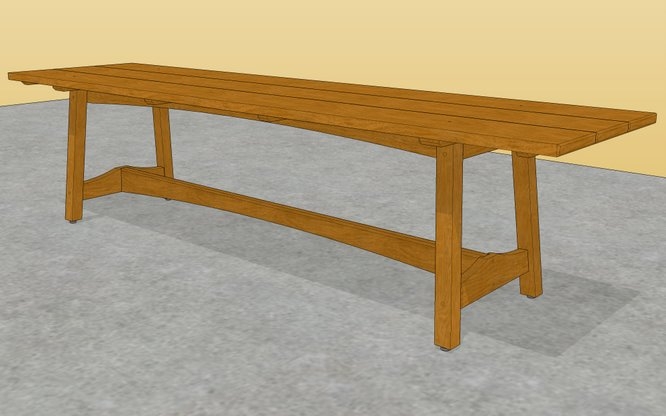
Click here for higher quality, full size image
Forum Responses
(Architectural Woodworking Forum)
From contributor D:
Warranty a table that is going to be outside in the Colorado weather? No way. What do they want it warrantied against? If that table is left outdoors in the sun, rain, ice, snow and whatever, it will change no matter what you do. I would go with building it like a deck, with each top board attached independently from the bottom. You could slot the hole in the skirt, but I don't think you could make it account for the extreme changes in the wood with the elements.
From the original questioner:
I've already told them I won't give them a warranty on the table holding up, but that I would give them one for my workmanship (whatever that means). I guess my main worry is the connections for those three wide top boards. Do you think I need to be that concerned with wood movement, using this nice KD vertical grained stock? How about this... I use these washer head type screws, screw/plug from the top down into the cleats, which will be ipe. My screwing pattern then would be 6 screws along each edge.
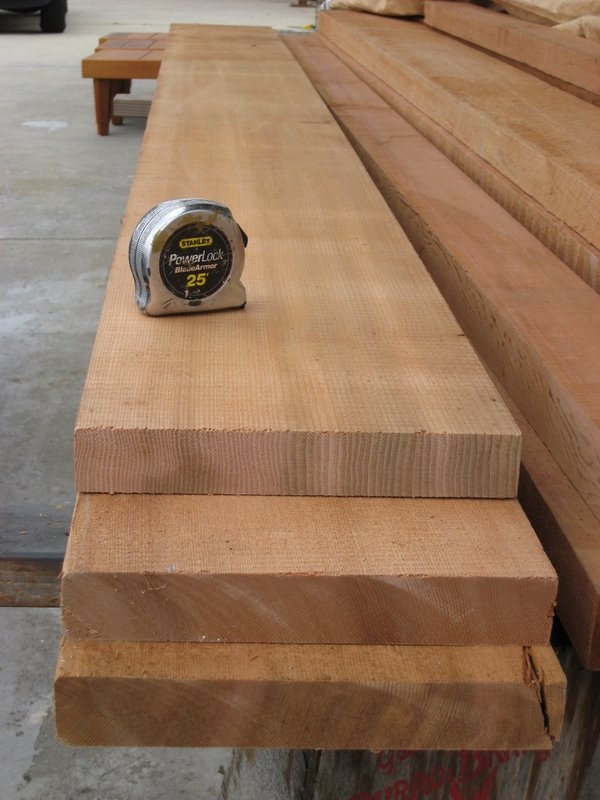
Click here for higher quality, full size image
Up close.

Click here for higher quality, full size image
From Gary Katz, forum technical advisor:
Nice drawing! Lots of components! Looks like a job for the Domino... Seems to me that the only real threat will be expansion, especially with the KD wood you're using. The wood will take on moisture in Colorado and swell. So the plank top should allow space for that. The screws from the bottom, with large washer heads, would allow for that movement. I wouldn't be concerned about using too many screws. I don't understand what you mean by "six on each edge." Two or three into each plank through the bottom cleats shouldn't cause a problem if the screw holes are elongated and if there's space between the boards for expansion?
It looks like the spreader or stretcher (?) sits in a blind mortise? I'd make that a through mortise so water drains out of it at the bottom. The mortises for the cleats might also trap water. Maybe pitch them toward the inside so they drain? I like the way the cleats sit on top of the legs and protect that end grain.
From Professor Gene Wengert, Sawing and Drying Forum technical advisor:
Certainly quarter (or vertical) grain is ideal. You have done the best that you can with wood selection unless you use teak. Note that UV light will grey the color quickly.
You should be careful when fastening so that the pieces can move. For example, fasten one edge securely with screws (from the bottom) but then fasten the other edge with screws in a slotted hole so that the wood can swell in width or shrink in width and yet stay fastened. These screws must be able to move in the slot, so maybe use a washer and do not over-tighten.
From the original questioner:
By six screws each side, I mean I have 6 cleats underneath, so each board gets screwed into all 6. I forgot to say we'll be sealing this with Penofin before shipping, so it'll be well sealed, and I'll request the customer gives it another coat.
From the original questioner:
Okay, I've been thinking this over and can't really see how I'd allow for movement when I attach those three top boards. How do you do it? Drill an oversize pilot hole, or a slot? You still need to draw the piece down fairly tight to hold it, and then you have a lot of friction. I don't see how the top boards could possibly move, especially if they expand a little with temperature or moisture. Can anyone explain how a little better how I'd allow for expansion if I decide to screw down through the top?
From contributor D:
Yes, this is a tough one to wrap your mind around. Make it tight, but let it move? Maybe just build it real tight like a deck. I spoke with a friend cabinetmaker. He lived in CO for a few years and he says the biggest problem up there is dry, dry, dry.
From contributor B:
You could deal with the wood movement by using narrower boards. Instead of using 3 wide boards, use 6 that are half as wide. The boards would still move, but each board would move only half as much. So instead of say 1/8" of movement, you would only get 1/16". Additionally, I would do the math. Get a copy of "Understanding Wood" by R. Bruce Hoadley - in that book is a chart that will allow you to predict the wood movement over a given moisture content range. I would also attach every joint with screws. There are a number of sources for ceramic coated or stainless screws. I would glue every glue joint with Gorilla Glue. We recently built 5 tables and 10 benches for a guest ranch in the Idaho Rocky Mountains. On those tables we pocket screwed the tops down to the stretchers from underneath and pocket screwed the stretchers to the legs from the inside.
You are correct in not warrantying this work. Wood is a vegetable matter that will decay when not protected. If these tables are outside in Colorado, the clients will be lucky if they get 3 years of use without some serious upkeep.