Today's
Sponsors:


SII Dry Kilns

Silvaris

Simantech

Single Source Cabinet Supplies

SIS Machinery

SK-USA

SketchList

SlipCon USA, Inc.

SnapDragon Associates, LLC

SNX Technologies

South State Machinery

Southeast Tool, Inc.

Sovereign Machine, Inc.

Specialtytools.com

Speed Sander

Spink Lumber

Sprayguncaptain.com

Stefani

Steve H. Wall Lumber Co.

Stiles Machinery

Opti-Sand

Optisol for Project Scheduling

Original Saw Company

Osborne Wood Products

Paragon Enterprises

Peninsula Hardwoods

Penn Sylvan International

People Logic Software Corp.

Pinske Edge

Pioneer Lumber Company

Pioneer Millworks

Planit Solutions

Plogic Solutions Ltd.

Pond Cove Paint

Porter-Cable

Precision Drive Systems

Premium Specialty Hardwoods

Prime Estimating and Software Services, LLC

Primo Woodworking Machinery

Pro.Woodworker.com

Pro100

Professional Hardware & Supply Co.

Professional Machinery Group

Quality VAKuum Products, Inc.

Quick Machinery Company

Quickscrews International Corporation

QuickScribe

QuickWood, Inc.

QuikDrawers

R&R Drummond, Inc.

R.A.W.

R.D. Billhofer Company

Rangate

Rawles-Aden Lumber Corp.

RazorGage

Rex Lumber Company

Riethmiller Lumber

Ritter Manufacturing Inc.

Rockler Woodworking and Hardware

Roger Shaw and Associates

Root River Hardwoods

Rose Machinery

Routech

RouterCAD

Royce Ayr Cutting Tools

RT Machine Co.

Safety Speed Cut

Sand-Rite Manufacturing

Sandman Products

Sawmill and Woodlot Magazine

Schultz Forming Products

SCM Group USA, Inc.

SCM Group

SCM

Sears Trostel Lumber Co.

Shomaker Lumber Company

ShopBot


Red Elm for Kitchen Cabinet Doors       Woodworkers discuss the appearance and workability of Red Elm for kitchen cabinetry. August 11, 2009

Question
We're remodeling the kitchen for a fussy client. They are looking for something different and have indicated that they like red elm with its medium color and subdued grain wood. They have ruled our walnut and cherry (too dark), hickory (want a more consistent color), alder (too soft) and oak (high contrast grain). I have not worked with elm before, but heard that it's has the tendency to split. Does anyone have any experience with elm? Or does anyone have any other recommendations in this situation?

Forum Responses
(Cabinetmaking Forum)
From contributor G:
We work with red elm quite a bit. My own kitchen is red elm. I wouldn't call the grain "subdued" but it is beautiful. Splitting is not a problem in and of itself but red elm is prone to shake and sometimes it is hard to detect. With sharp cutters it works well. It takes stain and clear very nicely. I personally like the natural color to show with a clear finish only.


From contributor C:
I agree that elm is not that subdued in grain, but more subdued than oaks, ash, and hickory. It has a very interesting zig-zag pattern in it when you look close. I don't think splitting is more of a problem in this species. Maybe someone didn't pre-dry it well, or as stated above, it may have had shake, but can't most or all hardwoods exhibit shake? In fact, as far as splitting goes, it doesn't split easily. It was disdained for firewood early on when only axes were used because it was so hard to split. The grain has some sort of cross-linking and fibers can hold on to each other tenaciously. For a more subdued grain, I'd look at maple. Soft maple is well priced now, but so is elm.


From contributor S:
I agree, for a subdued grain I'd go with maple. But I did one job for a client with similar requests and I did it in oak. I was selective on board choice, avoided any reds or knots, and finished it with "pickled oak", sort of a whitish tone. They loved it!


From contributor J:
Use it, it’s beautiful. Keep it out of the mulcher. I wish there was more of a market for it. I've done a few jobs in it and had no problems with the material. It does drink the finish though.


From contributor R:
Sorry, don't mean to distract, but I've never heard the term "shake". What does that mean?


From contributor C:
Wind shake, ring shake: a defect along the growth rings that looks like splits, but it follows the rings. Caused by physical stress while growing (wind), that breaks the bonds between growth rings. It ruins the wood for most purposes if it is present. Most mills will spot it and not process it further, but some minor shake can get through. If you see the wood come apart at the rings, it's shake.


From contributor G:
Here's a photo of red elm cabinetry in our home.
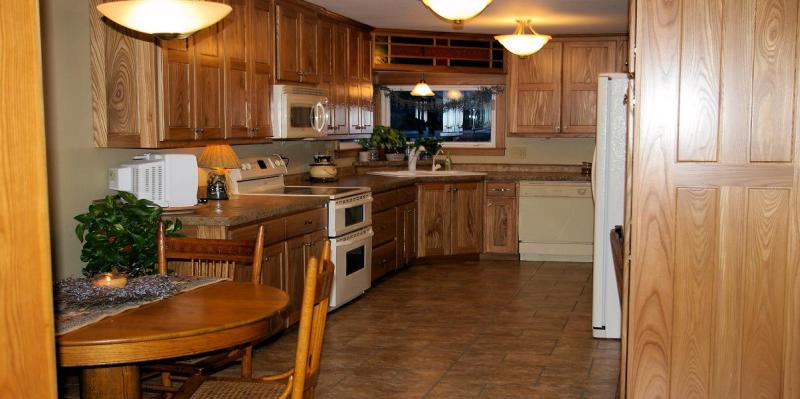

Click here for higher quality, full size image

The laundry room.
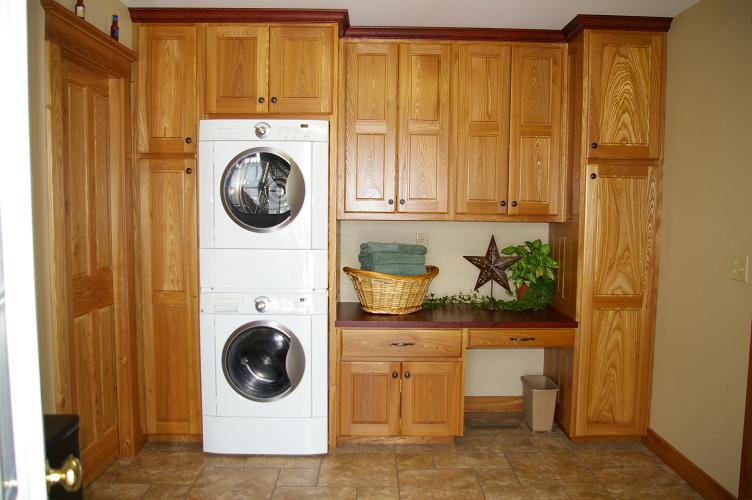

Click here for higher quality, full size image


From contributor L:
For "subdued grain" rift sawn in most any wood is relatively subdued. I wouldn't say plain sawn red elm is subdued. I've used it, what I got tended to be narrower and shorter than most other lumber. Its light weight and kind of soft. It's easier to work than the other elms.



Would you like to add information to this article?
Interested in writing or submitting an article?
Have a question about this article?


Have you reviewed the related Knowledge Base areas below?
  • KnowledgeBase: Knowledge Base

  • KnowledgeBase: Cabinetmaking

  • KnowledgeBase: Cabinetmaking: General

  • KnowledgeBase: Wood Engineering

  • KnowledgeBase: Wood Engineering: General


    Would you like to add information to this article? ... Click Here

    If you have a question regarding a Knowledge Base article, your best chance at uncovering an answer is to search the entire Knowledge Base for related articles or to post your question at the appropriate WOODWEB Forum. Before posting your message, be sure to
    review our Forum Guidelines.

    Questions entered in the Knowledge Base Article comment form will not generate responses! A list of WOODWEB Forums can be found at WOODWEB's Site Map.

    When you post your question at the Forum, be sure to include references to the Knowledge Base article that inspired your question. The more information you provide with your question, the better your chances are of receiving responses.

    Return to beginning of article.


    Refer a Friend || Read This Important Information || Site Map || Privacy Policy || Site User Agreement

    Letters, questions or comments? E-Mail us and let us know what you think. Be sure to review our Frequently Asked Questions page.

    Contact us to discuss advertising or to report problems with this site.

    To report a problem, send an e-mail to our Webmaster

    Copyright © 1996-2010 - WOODWEB ® Inc.
    All rights reserved. No part of this publication may be reproduced in any manner without permission of the Editor.
    Review WOODWEB's Copyright Policy.

    The editors, writers, and staff at WOODWEB try to promote safe practices. What is safe for one woodworker under certain conditions may not be safe for others in different circumstances. Readers should undertake the use of materials and methods discussed at WOODWEB after considerate evaluation, and at their own risk.

    WOODWEB, Inc.
    RR4 Box 265A
    Montrose, PA 18801

    Contact WOODWEB


  •   Home » Knowledge Base » Knowledge Base Article