Question
We have a small to medium sized cabinet shop. We do not make any of our own moldings and s4s. Instead, we order it in. This is where the problems start. Being custom, the customer demand is what determines what is used. We stock four different species of wood so any type of crown, baseboard, chair rail, bullnose that we stock we have to stock times four.
Some of the problems we run into are... A certain species will all of a sudden take off and be used way more than the others, making the bin too small for the amount we need to stock. If we then start placing the overstock in another location, we are handling the material two more times. Sometimes we get orders for species that we don't stock and then if there is too much, we place it at the top of the bin where it sits for a long time. On some of the molding styles we end up getting a bin of a lot of short pieces because the job might call for an 8 footer and the shop guys cut it out of an 11 footer and put the 3 footer back into the bin.
We usually measure each piece of molding and put the length of it on the front edge before placing it in the bin. That way when someone needs a certain length, they don't have to pull out and measure a bunch before they find the right piece. Sure it saves time when trying to find the right piece, but when it comes to taking the time to measure and mark everything before putting it in the bin, it takes a lot of time. It was fine when we were smaller but now that we are moving through a lot more, it makes it much harder.
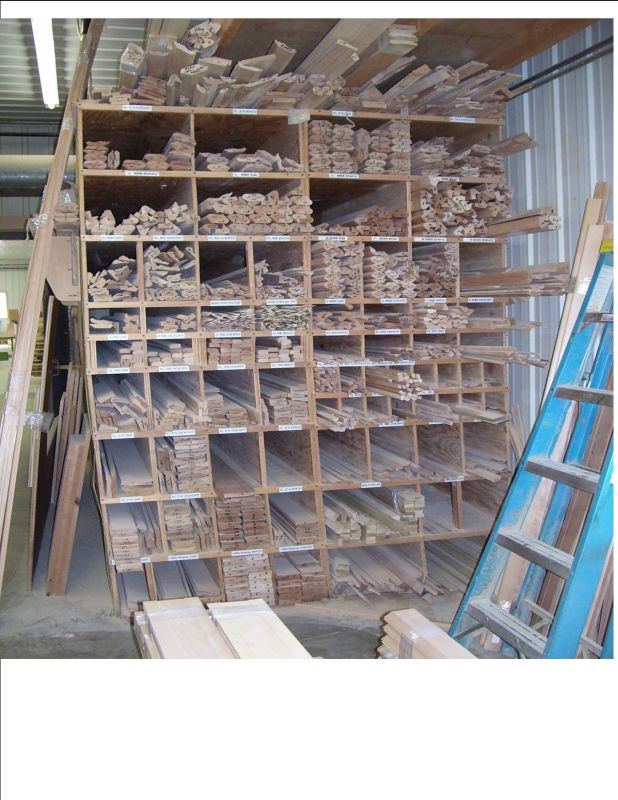
The picture below is to help you visualize the way we are doing it now. This is a picture of our molding bin. We also have a s4s bin for face frame that is set up very similar. What is a better way to move this material in and around (labeling, handling, etc), considering we don't have a lot of extra space?
Forum Responses
(Cabinet and Millwork Installation Forum)
From contributor F:
I don't know... looks really organized to me! You could fasten a tape measure to the left upright of your rack so that someone can quickly set the end of a molding scrap on the floor and see its length for most pieces. The scrap can then be slid into the correct bin and marked for length on the end grain with a felt tip pen that is always stored at the rack.
The other thing to consider is the "just in time" approach to manufacturing. That is, materials are never ordered unless they are needed for a job that has been sold. Most big companies I have worked for order materials on an as-needed basis and will not keep scrap in inventory. Most small shops order materials as needed but will keep some scrap in inventory. You are somewhere in between.
Be advised, though, any system is only as good as the guys that use it. A couple of flies in the ointment, our best supplier sends random sizes for hardwood, so we could get almost any mix of sizes, but the total footage is usually pretty good and then some. This kind of makes figuring the yield tough when we don't want too many joints. The other thing is that if you notice a disproportionate or consistent amount of short drops of the same size, you need to buy stock closer to the most common used size or larger by the difference to get a better yield.
Some folks are gonna say that you have too much money wrapped up in inventory and handling, but I say that on hand is speed and that the stock is most likely not gonna be as cheap for you to buy down the road as it was yesterday.
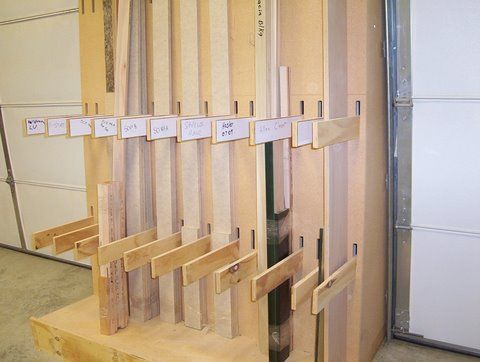
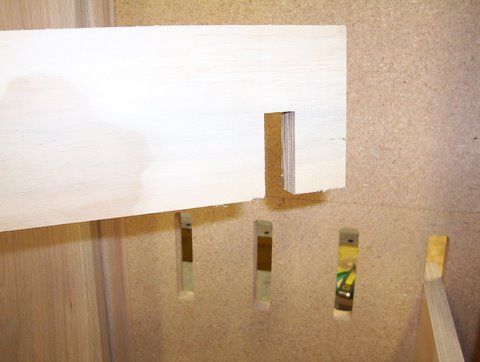
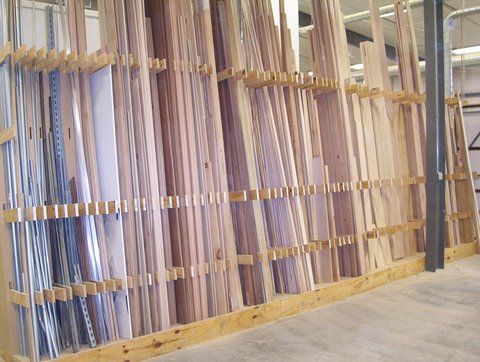
This way allows anyone to pick through for the best lengths, and the shorts are visible for possible sale. Encourage sales and use of shorts. While this requires 17' ceilings or better, it takes a smaller footprint. I used to stock about a quarter million feet of three species, and 30 patterns. Vertical storage is the only way to stay sane.
Comment from contributor A:
If you used 16" diameter drainage pipe, you can stack them naturally and add to it as needed. That only works if you are storing horizontal like you are now. You can also divide a pipe into two compartments by sliding a plywood divider that is the exact diameter of the inside of the pipe. It might also be easier to have a vertical bin for the shorter off-cuts so when you count you don't assume it is a full length. Only full length pieces go into the horizontal bin.
