Today's
Sponsors:


Finish Systems

Firth Maple Products

FORDAQ

FormWood Industries

Freeborn Tool Company

Fuhr International

Fuji Spray

Gabbiani Machine

Gary M. Katz

Global Hardwood Flooring

Glue Machinery Corporation

Goby Walnut Products

Graco, Inc.

Granite Road

Grayson Ferguson Woodworking Inc.

Great Lakes Kiln Drying Association

GreCon

GUHDO

Hanson and Leja Lumber Company

Hardwood Council

Hardwood Store of N.C. Inc.

Heartwoods, LLC

Her-Saf

Hermance Machine Company

High Point Grinding - Total Saw Solutions

Historical Plus Wood

CNCROUTERSTORE.com

CNT Motion Systems

Colonial Saw

Construction Programs and Results

Cook's Saw Mfg.

COOLwoodworkingstuff.com

Country Saw & Knife, Inc.

Courmatt International Inc.

CP Adhesives

CSH Custom Service Hardware Inc.

CTS Manufacturing Inc.

CustomMade.com

Cutlist Plus

D.S. Brown Machinery

Dancer Lumber

Delle Vedove USA, Inc.

Delmac Machinery Group

Delta

Denray Machine

DeVilbiss

Dispoz-A-Blade

Diversi-Tech

DMC

DODDS

Don Hall & Associates

Donald Dean and Sons

Durable Wood Products

E.W. Tooling Inc.

Eagle Machinery and Repair Co.

ECabinet Systems

Edge-It Edgebanding

Edwards Wood Products

Electrophysics

Elias Woodwork & Manufacturing

Elkom North America

Emerald Hardwood Floors

Endeavor Hardwoods

EnRoute WOOD

ETemplate Digital Measuring

ETK International

EX-FACTORY

Excel Dowel and Wood Products Inc.

Extrema Machinery

ez-Router

FastCap


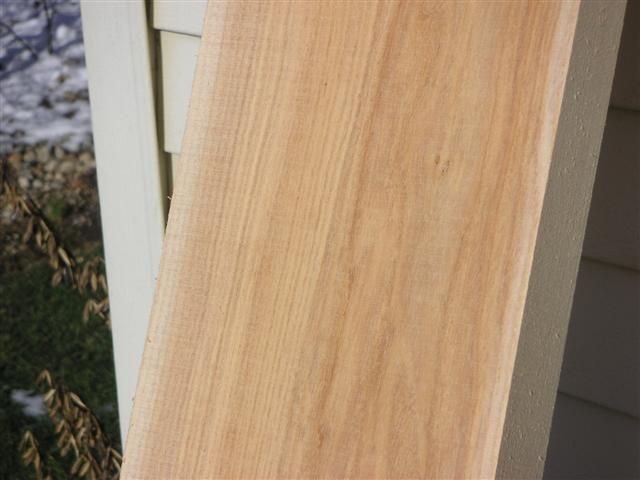
Uses for Yellow Poplar       Yellow Poplar makes excellent paint-grade cabinetry and trim, and can even be stained to resemble Cherry. April 27, 2007

Question
Started building a new home in northern VA. The home site is 12 acres loaded with white oak and yellow (tulip) poplar. I will definitely be claiming the white oak for lumber when the lot is partially cleared for the home. I also have the opportunity to mill several large yellow poplars as well. I have never worked with poplar before. I do hear that the lumber is excellent for paint application. Curious to see if milling the poplars would be worth the time and money.

Forum Responses
(Sawing and Drying Forum)
From Professor Gene Wengert, forum technical advisor:
YP is great for almost all uses.


From contributor J:
When I was in business building and installing custom cabinets and built-ins in Northern Virginia, I would use tulip poplar whenever the client would paint it. It was stable, fairly knot free, and competitive with pine at the time and good to work with. But with the green mineral coloration, it should always be painted. I also used it extensively for drawer sides. But I've moved out of the area where it grows and it isn't the bargain wood around here.


From contributor W:
If you can't find a use for the poplar, I'll take them off your hands... Seriously, here in central KY, yellow poplar is used frequently for external construction such as fence boards and barn siding. I know of one cabinetmaker who likes it for functional components that will not show when a piece is completed. And it is lighter and easier to saw than oak.


From contributor T:
It makes great molding, casing, base, crown, etc. It can be stained or painted. When staining, it needs to have a stain prep sealer applied first.


From contributor S:
I have seen yellow poplar used to look like cherry. It would take an experienced woodworker to know the difference. I know of one very large millwork company that has cherry stained poplar in one of their main offices and it looks immaculate.


From contributor O:
Maybe 99% of the "cherry" crown and moulding that I install is poplar. I would like to see how the finishers at the cabinet shops do such a great job of it. I have heard that it is a colored varnish or poly coat and done in one shot, but I haven't actually seen it done.

I've also got to agree that it is maybe the best there is for paint grade trim. Better than anything finger jointed, because the finger joints can tend to show through if not painted good, or even split open on cheaper stuff. And better than MDF that puckers when shot and expands when wet.

My only complaint about it is trying to put my own stain on it, and that is just because I am not a finisher and don't know the tricks of the trade. I have also heard that a first coat of a yellow dye is a trick, but it is all hearsay to me. Some guys complain that it does not clear the saw blade well when they saw it, but that could mean that they are using the wrong blade or feed rate.


From the original questioner:
Thanks for all of the responses. I would be very interested in how one makes poplar look like cherry after stain. Looks like I will be milling some poplar in the next few months.


From contributor A:
I used to buy poplar trim from a shop. They used oxalic acid to turn the green yellow.

Would you like to add information to this article?
Interested in writing or submitting an article?
Have a question about this article?


Have you reviewed the related Knowledge Base areas below?
  • KnowledgeBase: Knowledge Base

  • KnowledgeBase: Lumber and Plywood

  • KnowledgeBase: Lumber & Plywood: Wood Identification


    Would you like to add information to this article? ... Click Here

    If you have a question regarding a Knowledge Base article, your best chance at uncovering an answer is to search the entire Knowledge Base for related articles or to post your question at the appropriate WOODWEB Forum. Before posting your message, be sure to
    review our Forum Guidelines.

    Questions entered in the Knowledge Base Article comment form will not generate responses! A list of WOODWEB Forums can be found at WOODWEB's Site Map.

    When you post your question at the Forum, be sure to include references to the Knowledge Base article that inspired your question. The more information you provide with your question, the better your chances are of receiving responses.

    Return to beginning of article.


    Refer a Friend || Read This Important Information || Site Map || Privacy Policy || Site User Agreement

    Letters, questions or comments? E-Mail us and let us know what you think. Be sure to review our Frequently Asked Questions page.

    Contact us to discuss advertising or to report problems with this site.

    To report a problem, send an e-mail to our Webmaster

    Copyright © 1996-2009 - WOODWEB ® Inc.
    All rights reserved. No part of this publication may be reproduced in any manner without permission of the Editor.
    Review WOODWEB's Copyright Policy.

    The editors, writers, and staff at WOODWEB try to promote safe practices. What is safe for one woodworker under certain conditions may not be safe for others in different circumstances. Readers should undertake the use of materials and methods discussed at WOODWEB after considerate evaluation, and at their own risk.

    WOODWEB, Inc.
    RR4 Box 265A
    Montrose, PA 18801

    Contact WOODWEB


  •   Home » Knowledge Base » Knowledge Base Article