Today's
Sponsors:


Vintage Wood Products

VortexTool Co. Inc.

VyTek

W. Moore Profiles, Ltd.

W.L. Fuller

Wagner Electronic Products

WalzCraft Industries

WEIMA America, Inc.

Weinig Group - USA

Western Dovetail

Williams and Hussey

Wisconsin Knife Works

WMIA

WMMA

Wood Doctor's Rx, LLC

Wood Technology Inc

Wood-Mizer

WoodCabinetDoors.Com

WoodenBoat

WoodFinder

WoodJobs.com Search Consultants

WoodLINKS

Woodmaster

WoodPlanet Inc.

WoodSprayGuns.com

WOODWEB

Woodworker's Supply/woodworker.com

Woodworker's Directory

Woodworking in America

Wright Timber

Specialtytools.com

Speed Sander

Spink Lumber

Sprayguncaptain.com

Stefani

Steve H. Wall Lumber Co.

Stiles Machinery

Stiles Shop Solutions

Stoneys Hardwoods

Super Source Tooling Inc.

Supergrit Abrasives

Superior Wood Products

T-Tool USA LLC

Target Coatings

TaylorCraft Cabinet Door Company

Techno CNC Routers

Template Services

The Veneer Store

Thermwood Corporation

Tiger Wood Ltd.

TigerStop

TigerwoodDecking.com

TimberKing

Timesavers Inc.

TMS Machinery Sales

Tomlin Architectural Millwork

Tooling on the Web

Toolstoday.com

Top Drawer

Touch Up Solutions LLC

Tractivity

TradeJobPlacement.com

TradeSoft

Trakware Systems Inc.

TRB Flooring Company

Tropical Hardwoods

True North Cedar

Ubidmachinery Inc.

UC Coatings Corp.

Unique Building Supples

Unique Machine & Tool

University of Wisconsin

UWMO Auctions

VacDry Kilns

Vacuum Pressing Systems, Inc.

Vacuumpods.com

Valspar

Vecoplan LLC

Vector Art 3D

Vectric Ltd.

Veneer Systems Inc.


Why Is Finish Curling Alder Veneer?       Finish applied to thin veneer may cause curling. July 29, 2007

Question
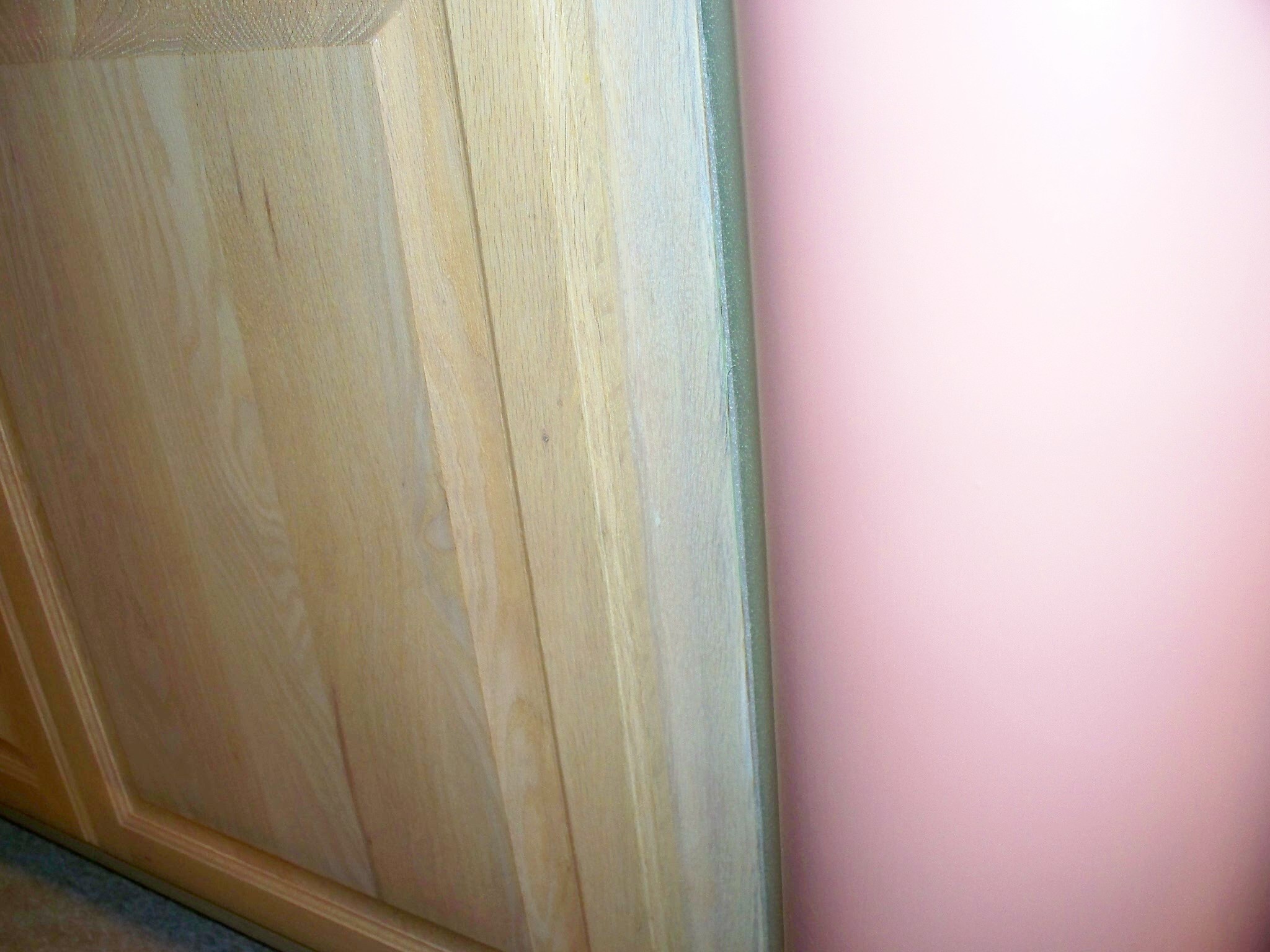
Well, it's doing it again - my 2' x 8' sheets of alder veneer (sticky back 3m) are curling cross grain, after staining and spraying with 2 coats of catalyzed vinyl sealer, followed by 2 coats of CV topcoat. These were thinned with approximately 25% butyl acetate.

The veneer is not glued to anything, it's just to be used for re-facing cabinets. So it's still in the 2' x 8' sheets. I had some curl back in Sept of '06, which turned out to be a nightmare, as after refacing the kitchen, the curling kept up its work and lifted the edges of the strips on the stiles and rails.

Now this time I happened to be watching for this curling, which took about 24 hours to start. So at least I have not applied the veneer in my customer's house yet. It's still in my shop. But what am I going to do to get this to stay flat? I don't dare use this. Why is finishing it causing it to curl? Refacing is done across the country on quite a large scale, so I know somebody has a solution.

Forum Responses
(Finishing Forum)
From contributor C:
Take a piece of unbacked veneer and spray it with a coat of varnish and you will see the same thing happen. Or if you don't want to waste the varnish, just wipe some warm water on it and wait a few minutes - you will see the veneer curl. The reason is that you are wetting the surface, causing it to expand on one side of the veneer. As you will notice, it always curls with the length of the grain. As the finish dries, it usually relaxes to a degree. The answer to overcoming this problem is to use a veneer that is backed with phenolic, which is hard and won't allow it to curl to any degree that would be unsatisfactory. I have been using this since the 80's and have had no problems or callbacks. Oversize it by an inch or so, route off the excess, and file the edges just like laminate – job's done, collect your money.


From the original questioner:
Does the phenolic backed veneer come as pre-glued? Or do you apply glue to the veneer and the cabinets?

My veneer is curling across the grain... That is, you could take the 2' x 8' piece and roll it so you have an 8' long tube. If you wet veneer with water, won't it expand the side you are wetting? My veneer is curling up toward the face concave. I will look into the phenolic back. My finish is solvent base, though, not water base. What do you use and what percentage do you thin it? For veneer?


From contributor C:
Yes, as I said, if you wet the veneer down on one side, it will expand the veneer and that's what makes it curl, but - when you have a thick phenolic back, it is unable to do so to any extent. It does a little, but as the finish dries, it relaxes and by next day it is virtually flat again. What's happening in your case is that as the finish is shrinking, it's pulling the veneer up because you have added thickness to one side and not the other. All finishes contract as they are drying and they pull upon the surface, in your case unsupported veneer.

Do me a favor and make a sample - spray two coats on one side, let dry overnight, and then spray two coats on the other side and let me know what happens. What should happen is that the coating thickness being equal on each side should lay the veneer back out again. I know the first time I used polyester on 1/4" plywood it happened, but as soon as I put it on the other side, it laid back out flat again, as all other pieces I have done since then.

Also, do not use water base, continue with the solvent base - you've misread my first post! All I wanted you to do was put water on a sample to show you how it curled, not knowing yours was an applied finish problem. My mistake.


From contributor R:
I'd say your finish is shrinking in size as it cures. Doubt if there's anything you can do. Maybe you should try using WB - that way the veneer will curl the other way; when it dries it will come back a little. When you glue it down on your re-facing jobs, the edges won't be in tension and should stick better. The few re-facings I've done I used 3ply plywood. Didn't have any problems.


From the original questioner:
How thick was the plywood? What did that thickness do to the screw position in the edge of the face frame for your hinges? I've thought about ply but 1/8" from the front edge of the original face frame makes me nervous. Did you glue it on?

Would you like to add information to this article?
Interested in writing or submitting an article?
Have a question about this article?


Have you reviewed the related Knowledge Base areas below?
  • KnowledgeBase: Knowledge Base

  • KnowledgeBase: Finishing

  • KnowledgeBase: Finishing: General Wood Finishing

  • KnowledgeBase: Veneer

  • KnowledgeBase: Veneer: Techniques


    Would you like to add information to this article? ... Click Here

    If you have a question regarding a Knowledge Base article, your best chance at uncovering an answer is to search the entire Knowledge Base for related articles or to post your question at the appropriate WOODWEB Forum. Before posting your message, be sure to
    review our Forum Guidelines.

    Questions entered in the Knowledge Base Article comment form will not generate responses! A list of WOODWEB Forums can be found at WOODWEB's Site Map.

    When you post your question at the Forum, be sure to include references to the Knowledge Base article that inspired your question. The more information you provide with your question, the better your chances are of receiving responses.

    Return to beginning of article.


    Refer a Friend || Read This Important Information || Site Map || Privacy Policy || Site User Agreement

    Letters, questions or comments? E-Mail us and let us know what you think. Be sure to review our Frequently Asked Questions page.

    Contact us to discuss advertising or to report problems with this site.

    To report a problem, send an e-mail to our Webmaster

    Copyright © 1996-2009 - WOODWEB ® Inc.
    All rights reserved. No part of this publication may be reproduced in any manner without permission of the Editor.
    Review WOODWEB's Copyright Policy.

    The editors, writers, and staff at WOODWEB try to promote safe practices. What is safe for one woodworker under certain conditions may not be safe for others in different circumstances. Readers should undertake the use of materials and methods discussed at WOODWEB after considerate evaluation, and at their own risk.

    WOODWEB, Inc.
    RR4 Box 265A
    Montrose, PA 18801

    Contact WOODWEB


  •   Home » Knowledge Base » Knowledge Base Article