Home » Knowledge Base » Knowledge Base Article What's New  |  Site Map 


Today's
Sponsors:


FlexiCAM

FORDAQ

Forest City Tool

FormWood Industries

Freeborn Tool Company

FS Cruing

FS Tool Corporation

Fuhr International

Fuji Spray

Furniture D Cube

G&M Woodcopy Lathes

Gabbiani Machine

Glue Machinery Corporation

Goby Walnut Products

Granite Road

Great Lakes Kiln Drying Association

Great Northern Lumber

Greco Manufacturing

GreCon

Green Forest Products

GUHDO

Hanson and Leja Lumber Company

CIM-Tech

Clear Lake Lumber

CNC Auto-Motion

CNC Parts Dept.

CNCROUTERSTORE.com

CNT Motion Systems

Colonial Saw

Construction Programs and Results

Construction Recruiters

COOLwoodworkingstuff.com

Copemaster

Cordes Machine

Country Saw & Knife, Inc.

Courmatt International Inc.

CP Adhesives

CraftMaster Manufacturing

CSH Custom Service Hardware Inc.

CTD Machines

Custom Woodworking Business

Cutlist Plus

D.S. Brown Machinery

Dancer Logging

Delle Vedove USA, Inc.

Delmac Machinery Group

Delmhorst Instrument Co.

Delta

Denray Machine

DeVilbiss

Diehl Machines

Direct Source Imports

Dispoz-A-Blade

Diversi-Tech

DMC

DODDS

Don Hall & Associates

Donald Dean and Sons

Doucet Machineries Inc.

Downdrafttable.org

Durable Wood Products

E.W. Tooling Inc.

Eagle America

Eagle Machinery and Repair Co.

EasyCoper Tool Company

ECabinet Systems

Edge-It Edgebanding

Electrophysics

Elias Woodwork & Manufacturing

Elkom North America

Endeavor Hardwoods

EnRoute WOOD

ETemplate Digital Measuring

Eterna Lighting

ETK International

Eurosoft, Inc.

EX-FACTORY

Excel Dowel and Wood Products Inc.

ExpressSander.com

Extrema Machinery

FastCap

FESTOOL

Finish Systems


WOODWEB DISCLAIMS any and all RESPONSIBILITY and LIABILITY for the accuracy and application of the information below. Readers agree to evaluate the significance and limitations of the information provided, and accept full responsibility for the application of this information. Read More ...

Would you like to add information to this article?
Interested in writing or submitting an article?
Have a question about this article?


Working with Ash       Beautiful and easy to work, ash also ages well. Fans discuss ash and its virtues in this thread from the Architectural Woodworking forum. November 9, 2005

Question
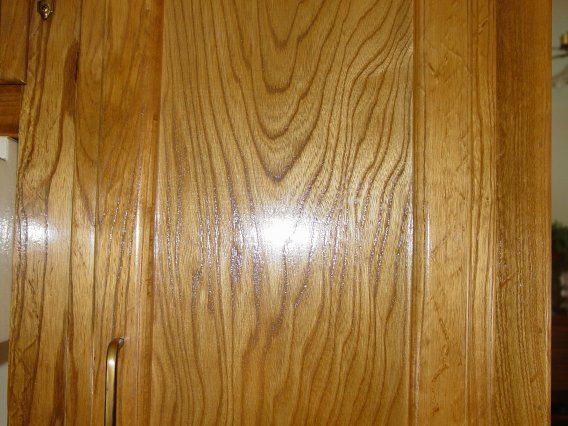
In 14 years as a woodworker, I’ve never had the opportunity to work with Ash, and I have a few questions. Is there a substitute wood that can be used for the face frames and doors like birch is used to substitute for cherry? Are there any characteristics about the wood I should know about when it comes to the finishing? By the way, this is Ash right? I feel like a rookie for having to ask.

Click here for full size image

Forum Responses
(Architectural Woodworking Forum)
From contributor A:
I love working with ash! Milling, finishing, carving, turning, but I have found that the finished ply is more expensive than oak. Beware of beetles, but not the rock group. I think Dr. Gene gave some insight into ash once somewhere.


From contributor B:
Ash is very open grained, so you can use grain filler or paste. It is a very beautiful wood that will never be mistaken for Formica or Wilson Art.


From contributor C:
The only wood I've ever worked with that could resemble ash is Catalpa. Both are beautiful woods in my opinion. I treat ash as I would red oak.


From contributor D:
It's hard to tell from the picture, but at first glance I wondered if the main piece was elm.


From contributor E:
At first glance, I thought the panel might be elm because of the little zig-zag lines between the early wood rings, but when you look at the marks on the right style, those little worm looking trails are caused by a beetle in the bark which allows the new cells in the cambium to fill the void where they excavated. This is a trait common to ash. They were present while the tree was still growing without hurting the tree.


From contributor F:
Ash can be a bit chippy when planing, so watch your grain directions. It can also be splotchy when staining, but I haven't run into this very often. I've always considered it a relatively similar in grain appearance to red oak; jut more finely detailed and elegant looking. Over the years I've built dozens of kitchens out of many different species for customers. I built my own out of ash.


From contributor G:
I think you have a mix of Elm and Ash, but it’s hard to tell from the pictures. Why are you looking for a substitute? Ash is a very easy wood to work. I personally hate to mix species of wood when they are on exposed surfaces together. I have never seen Birch look like anything but Birch no matter how well it is finished.


From contributor H:
Ash is generally much cheaper than oak or cherry, so I don't know why you would want to substitute. One other thing - the solids come in two colors, frequently mixed in one board. There is the creamy yellow and a deeper brown. If you do a natural finish, the brown will fade out after 4-5 years and you get the nice patina seen in your photos. When you buy ash ply, there is almost never any brown, so mixing solids and plys can be a problem unless you stain. Ash stains well, but then it just looks like oak. In my opinion, there is nothing like a nice patinized ash (10 years old or more) and 100 year old natural ash is a beautiful thing.


From contributor I:
As far as the substitute question, I'm not looking for a substitute, just information about the wood itself. Some woods can be subbed for others and I was curious if Ash had a suitable substitute.


From contributor J:
It sure looks like elm. If you can get a 10x magnifier, look at a clean cut of the end grain. You will probably see ulmiform pores (wavy bands of latewood pores) that make the feathery grain appearance. We find it a bit tougher to work and finish than ash. Sometimes raised fibers are a bit of a problem when finishing, and they must be scraped or sanded smooth.

Have you reviewed the related Knowledge Base areas below?
  • KnowledgeBase: Knowledge Base

  • KnowledgeBase: Lumber and Plywood

  • KnowledgeBase: Lumber & Plywood: Wood Identification

  • KnowledgeBase: Wood Engineering

  • KnowledgeBase: Wood Engineering: Wood Properties


    Would you like to add information to this article? ... Click Here

    If you have a question regarding a Knowledge Base article, your best chance at uncovering an answer is to search the entire Knowledge Base for related articles or to post your question at the appropriate WOODWEB Forum. Before posting your message, be sure to
    review our Forum Guidelines.

    Questions entered in the Knowledge Base Article comment form will not generate responses! A list of WOODWEB Forums can be found at WOODWEB's Site Map.

    When you post your question at the Forum, be sure to include references to the Knowledge Base article that inspired your question. The more information you provide with your question, the better your chances are of receiving responses.

    Return to beginning of article.


    Refer a Friend || Read This Important Information || Site Map || Privacy Policy

    Letters, questions or comments? E-Mail us and let us know what you think. Be sure to review our Frequently Asked Questions page.

    Contact us to discuss advertising or to report problems with this site.

    To report a problem, send an e-mail to our Webmaster

    Copyright © 1996-2008 - WOODWEB ® Inc.
    All rights reserved. No part of this publication may be reproduced in any manner without permission of the Editor.
    Review WOODWEB's Copyright Policy.

    The editors, writers, and staff at WOODWEB try to promote safe practices. What is safe for one woodworker under certain conditions may not be safe for others in different circumstances. Readers should undertake the use of materials and methods discussed at WOODWEB after considerate evaluation, and at their own risk.

    WOODWEB, Inc.
    RR4 Box 265A
    Montrose, PA 18801

    Contact WOODWEB