Question
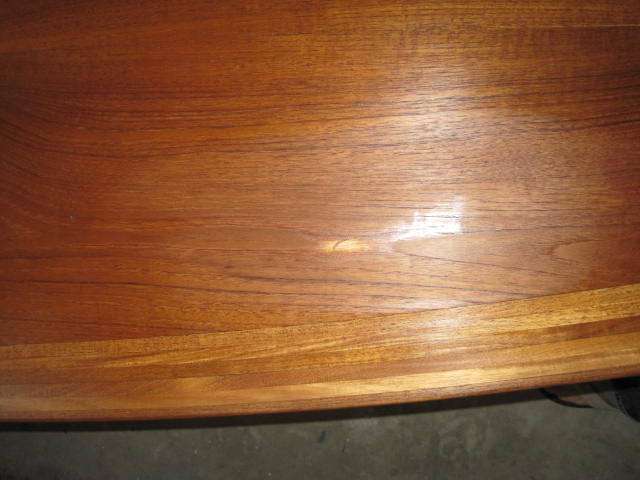
I'm having a problem with the finish on a recent piece. The area around each opening has, for lack of a better word, evaporated. It appears as if there is no finish there and a slight grayish tinge to the area. Is this blush? I have never encountered this before, but I will be the first to admit that I am no finisher. However, I seem to do a lot of it. For the record, the piece is oiled cherry, with sanding sealer and top coated with WW nitrocellulose lacquer (rubbed effect). This problem did not appear on the sealer coat, only on the top coat. The first coat developed this problem so I sanded it and shot it once more with the same results. It looked fine going on but as it dried, it manifested itself again. Also, for the record, it was a bit humid and cold that day, but other pieces I shot at the same time had no problem. I am baffled and turn to the Finishing Forum brain trust for guidance.
Forum Responses
(Finishing Forum)
From contributor J:
What you're experiencing is called blushing. This happens when moisture (water) is absorbed from either the atmosphere or objects placed on a finish. To remove this, you'll have to safely warm up your shop before finishing is done and try to maintain a steady temp. Since you have already topcoated, you can load a cup gun with lacquer thinner and spray, which will allow moisture to release out of finish. The use of a retarder also will aid in preventing blushing, but at the cost of slower dry times.
When the solvents in the lacquer quickly evaporate, it cools the surface. Put a little alcohol on the back of your hand and let it evaporate; it'll feel cold. If the dew point is close to the ambient temperature, the cooling effect of the evaporating solvents causes condensation (dew) to form and it gets trapped in the finish. The moisture turns the finish milky.
I'd also use a little retarder to avoid the problem or wait until the humidity goes down, or turn up the heat in your shop and warm up the pieces you're spraying. With any of these fixes, the next coat should take care of the problem.
Yes, oiled prior to sealer coat and cured for about a week.
If heating isn't an option, then just use the minimum amount of retarder needed to cure the problem. It depends on the lacquer, but I can usually get by with 2% retarder and go up to 5% when the humidity is really high.
It's pretty normal to see blushing concentrated at edges and corners. Seems to be the way the air moves over a piece as it's drying and the evaporating solvents create their own air movement. I've had pieces blush just on an end where they were exposed to moving air (air flow into the booth).
The same principle applies to the charcoal in your grill, and the steak on your plate. The edges cool quickest.