Today's
Sponsors:


Cabinet Pro

CabinetCRUNCHER Cutlist & 3D Cabinet Design Software

Cabinetmakers Association

CADCABINETS.COM

CADCode

Cag Lumber

Cantek America

Carolina Woodworking Consultants

Carter Products

Carvewright

Carving Technologies

Castle

Catskill Timber Industries

Charles G.G. Schmidt Co.

Chicago Dowel Company, Inc.

Clear Lake Lumber

CNC Parts Dept.

1-800-Cabinets.com

2Sand.com

3M Corporation

A O M Spray Equipment

Abrasive Resource

Accu-Router, Inc.

AceCo Precision Wood Tooling

Activa

Air Cleaning Systems

Air Handling Systems

Alan McIlvain Company

Algoma Lumber Co.

All Star Adhesives

Alliance Millsoft

Allied Machinery Inc.

AllRout

Amana Tool

Ameitech South

American Fabric Filter Co.

American Institute of Building Design

American National Woodworking Knife

American Rotary Converters

Andreou Machinery

ANEST IWATA USA, Inc.

Antique Beams and Boards

Antique Building Materials

Anver Corporation

Apollo Sprayers Inc.

Arbor Processing Inc.

Architectural Elements

ArtCam

ATEMAG

Atlantic Machinery Corp.

Auton Motorized Systems

AWFS

B.H. Davis Company

Bailey's Inc.

Bainbridge Manufacturing

Baker Products

Banks Hardwoods

Barn Detail

Barn Door Lumber

BC Wood Specialties Group

BeamsRUS

Beaver Tools

Benz Incorporated

Best Cabinets

BetterVacuumcups.com

Biesse America

Biewer Lumber

Binks

Black Bros. Co.

Blackhawk Machinery

Briquetting Solutions by Sunomi LLC

Brown Wood Products Co.

Business Management Solutions

Byrd Tool

C.R. Onsrud

Cab Parts

Cabinet Door Service Co.


Brewing Up an Ebonizing Dye Stain       Iron steeped in vinegar makes an interesting stain for darkening wood. February 14, 2006

Question
Does anyone have knowledge of a wood stain called "Old Growth"? I was wondering what the contents were that make up its unique colors? Is it possible to create an array of colors just by adjusting pH levels of product?

Forum Responses
(Finishing Forum)
From contributor A:
A dye stain can be produced by adding steel wool pads, some old rusty nails and screws into a jar of vinegar, and allowing it to ferment. Depending on the brew that you make up and the woods you use this acid dye on, you can get many different colors. For example: woods with high tannin content will give you all kinds of grays - from barnyard gray to ebony black. On some woods with lower tannin, you can get many colors of yellow and even a caramel color. You will need to make up complete samples, and spend some time learning about this acid dye. It certainly has a place in finishing, if you’re into that kind of finishing.
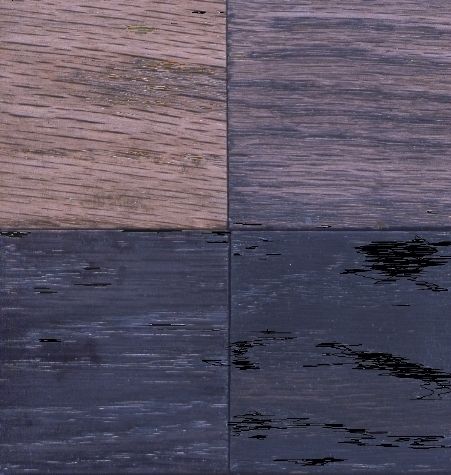


From contributor A:
The attached photo shows some of colors you can brew to ebonize certain woods with the vinegar dye stains, from the light silver gray to ebony black.


Click here for full size image


From contributor A:
I personally would not use lye on my woods. It’s a powerful chemical that can affect certain woods in different ways. Ammonia fuming is another way of coloring the woods. Both of these coloring techniques take knowledge, and trial and error testing, plus samples. I would suggest you do some research before getting involved with potent chemicals. Patinated finishes also uses different chemicals to produce assorted colors that make up some beautiful finishes. I prefer to do my finishes with colorants rather than chemicals, but that doesn't mean that my way is the right or the best way. It’s personal.

Attached is a photo of a faux patinated finish that I did for an article that will appear in *Custom Woodworking Business* in 2006. This Tall Box was done with only colorants.
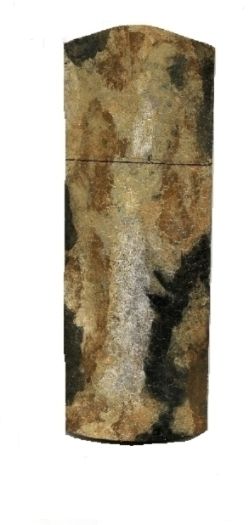

Click here for full size image


From contributor A:
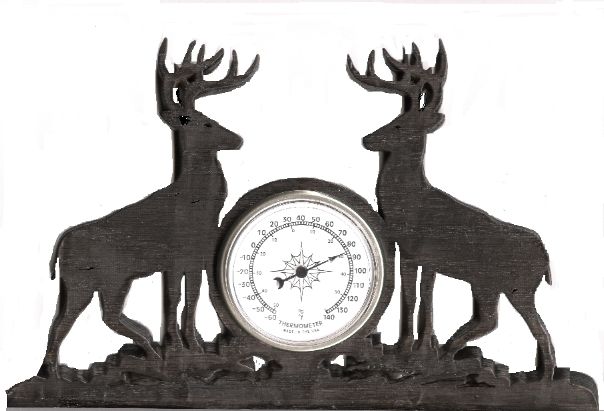
This photo shows a very dark ebonized finish, on Oak.


Click here for full size image


Would you like to add information to this article?
Interested in writing or submitting an article?
Have a question about this article?


Have you reviewed the related Knowledge Base areas below?
  • KnowledgeBase: Knowledge Base

  • KnowledgeBase: Finishing

  • KnowledgeBase: Finishing: General Wood Finishing


    Would you like to add information to this article? ... Click Here

    If you have a question regarding a Knowledge Base article, your best chance at uncovering an answer is to search the entire Knowledge Base for related articles or to post your question at the appropriate WOODWEB Forum. Before posting your message, be sure to
    review our Forum Guidelines.

    Questions entered in the Knowledge Base Article comment form will not generate responses! A list of WOODWEB Forums can be found at WOODWEB's Site Map.

    When you post your question at the Forum, be sure to include references to the Knowledge Base article that inspired your question. The more information you provide with your question, the better your chances are of receiving responses.

    Return to beginning of article.


    Refer a Friend || Read This Important Information || Site Map || Privacy Policy || Site User Agreement

    Letters, questions or comments? E-Mail us and let us know what you think. Be sure to review our Frequently Asked Questions page.

    Contact us to discuss advertising or to report problems with this site.

    To report a problem, send an e-mail to our Webmaster

    Copyright © 1996-2009 - WOODWEB ® Inc.
    All rights reserved. No part of this publication may be reproduced in any manner without permission of the Editor.
    Review WOODWEB's Copyright Policy.

    The editors, writers, and staff at WOODWEB try to promote safe practices. What is safe for one woodworker under certain conditions may not be safe for others in different circumstances. Readers should undertake the use of materials and methods discussed at WOODWEB after considerate evaluation, and at their own risk.

    WOODWEB, Inc.
    RR4 Box 265A
    Montrose, PA 18801

    Contact WOODWEB


  •   Home » Knowledge Base » Knowledge Base Article