Today's
Sponsors:


J&P Machines

J. Gibson McIlvain Company

JMHsoftware.com

Joos USA Inc.

JusDust.com

KCD Software

Kentucky Pacific Lumber

Kerber Farms and Mill

Keystone Wood Specialties

Keytrix Data Systems

Kleiberit Adhesives USA, Inc.

Kreg Tool Company

Kremlin

Lacy Cypress Inc.

Laguna Tools

Leadermac USA

Leitz Tooling Systems

Lewis Lumber Products

Lignomat

Limtech Industries, Inc.

Logosol

Lumber Resources

Lumber Smith

M.L. Campbell

MACHINEKING.com

MARTIN Woodworking Machines Corp.

Mastercam - CNC Software

Maxima Software

Maya Positioning Equipment

Mereen-Johnson Machine Company

Merritt Woodwork

Microvellum

Middle Valley Lumber

Mikron Woodworking Machinery

Mill Outlet

Millwork Inc.

MLS Machinery

Monarch Machinery

Monarch Metal Z Clip and Panel Clip

Moulder Techniques

Mountainside Wood Products

MultiCam Southeast

Multicam, Inc.

Nail Gun Depot

New England Drawer

New England Kiln Drying Association

NEWCNC.com

Nyle Dry Kiln Systems

O'Shea Lumber Company

Old Mississippi Brick and Heart Pine Company

Oliver Machinery Co.

Omnitech Systems

ICA North America

Impact Search and Placement

Industrial Air Solutions

Integra Precision Grinding and Manufacturing

IpeDepot.com

irsauctions.com

Italpresse

J & G Machinery

J and B Hardwood Co.


Hard maple versus soft Maple

      Aesthetic and functional differences between hard and soft maple

Question
We have been using hard maple for all of our maple kitchens and millwork for years and now our lumber supplier is suggesting the use of soft maple instead. What has been your experience when using soft maple? In a related matter, I have an architectural spec calling up material for a large run of cabinets as "hardwood" and in the subsequent color schedule as "maple". Would you consider soft maple for such an application, and would you ask for clarification before doing so? The cabinets have glass doors with narrow little frames so I would rather use the soft maple for reasons of warpage.

Forum Responses
You didn't mention whether the project was paint grade or clear finish.

Many of my fellow cabinetmakers and I use soft maple for paint grade face frames and doors. It’s a lot harder and more stable than poplar, while costing roughly the same. It also gives a better paint surface due to its hardness.

The primary difference between hard and soft maple is obviously hardness, but also color. The hard maple you buy should be 99% white sapwood. The soft maple often comes in about 50-75% white sapwood with the remainder being a gray/brown heartwood. This doesn't present a problem if painting, but clear finish looks terrible.


The above response is on target. I'm not sure of the percentages, but soft maple will vary in color and is not usually appropriate for a clear finished job.

As far as the specs concerned, I would certainly verify the species if possible, especially if you think you might go with soft maple.

You also mentioned using soft maple for muntins to avoid warpage. I don't believe you'll get any improvement over hard maple in that regard.
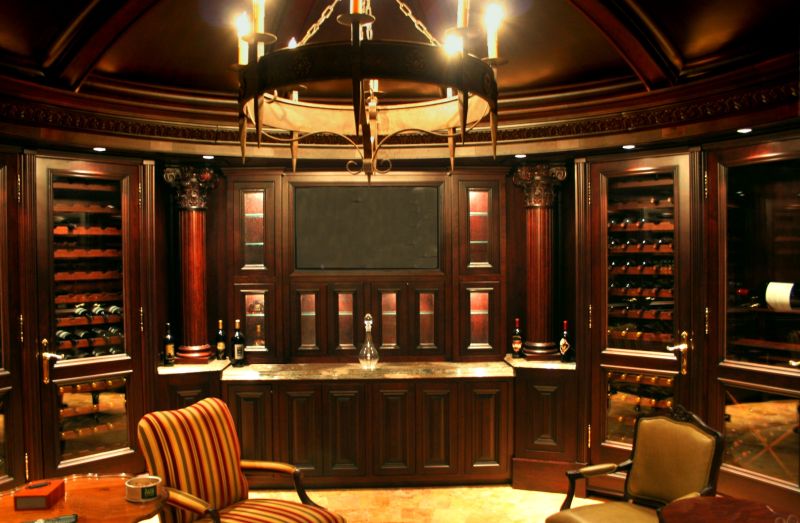


I have been using soft maple for a while now and have had success with it. While I wouldn't use it where a clear finish is called for, it takes darker stains well. Prior to staining I use a simple shellac wash coat to prevent any problems with blotching. I know for a fact, many large cabinet manufacturers use it all the time in there maple cabinet lines. Many of my customers want the look of cherry, but lately the price has been prohibitive for many of them. I stain the SM to match a traditional deep cherry fairly well.


Would you like to add information to this article?
Interested in writing or submitting an article?
Have a question about this article?


Have you reviewed the related Knowledge Base areas below?
  • KnowledgeBase: Cabinetmaking

  • KnowledgeBase: Cabinetmaking: Commercial Cabinetry

  • KnowledgeBase: Cabinetmaking: Custom Cabinet Construction

  • KnowledgeBase: Cabinetmaking: General

  • KnowledgeBase: Cabinetmaking: Residential Cabinetry

  • KnowledgeBase: Finishing

  • KnowledgeBase: Finishing: General Wood Finishing

  • KnowledgeBase: Lumber and Plywood

  • KnowledgeBase: Lumber & Plywood: Buying

  • KnowledgeBase: Lumber & Plywood: Wood Identification

  • KnowledgeBase: Wood Engineering: Wood Properties

  • KnowledgeBase: Knowledge Base


    Would you like to add information to this article? ... Click Here

    If you have a question regarding a Knowledge Base article, your best chance at uncovering an answer is to search the entire Knowledge Base for related articles or to post your question at the appropriate WOODWEB Forum. Before posting your message, be sure to
    review our Forum Guidelines.

    Questions entered in the Knowledge Base Article comment form will not generate responses! A list of WOODWEB Forums can be found at WOODWEB's Site Map.

    When you post your question at the Forum, be sure to include references to the Knowledge Base article that inspired your question. The more information you provide with your question, the better your chances are of receiving responses.

    Return to beginning of article.


    Refer a Friend || Read This Important Information || Site Map || Privacy Policy || Site User Agreement

    Letters, questions or comments? E-Mail us and let us know what you think. Be sure to review our Frequently Asked Questions page.

    Contact us to discuss advertising or to report problems with this site.

    To report a problem, send an e-mail to our Webmaster

    Copyright © 1996-2012 - WOODWEB ® Inc.
    All rights reserved. No part of this publication may be reproduced in any manner without permission of the Editor.
    Review WOODWEB's Copyright Policy.

    The editors, writers, and staff at WOODWEB try to promote safe practices. What is safe for one woodworker under certain conditions may not be safe for others in different circumstances. Readers should undertake the use of materials and methods discussed at WOODWEB after considerate evaluation, and at their own risk.

    WOODWEB, Inc.
    335 Bedell Road
    Montrose, PA 18801

    Contact WOODWEB


  •   Home » Knowledge Base » Knowledge Base Article