Identifying an Oak Log
but what does it smell like? February 14, 2006
Question
What kind of wood is this? This log came in on a mixed load from a clearing. Most of it was junk, so I paid firewood price for the lot. Small, crooked walnut, hickory, mulberry... This log had thin sapwood, the bark is rough (looks like white pine), but thin. The lumber is hard and heavy. The log had laid, and the first foot was rotten, but it had not cracked. I am in central Illinois.
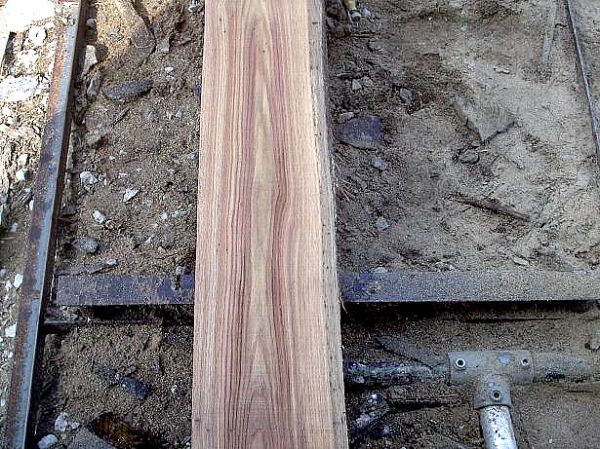
Click here for full size image
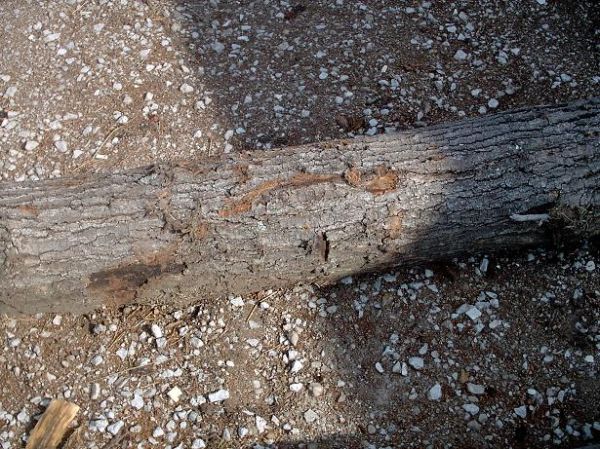
Here is the bark.
Click here for full size image
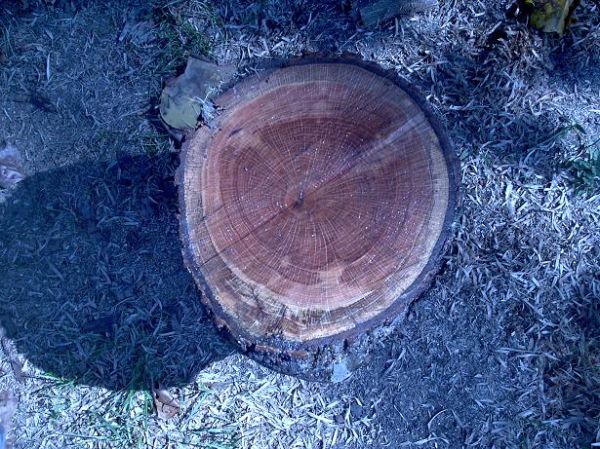
This cross section may not be much help. I was still trying to get to good lumber and it doesn't give a true look at the wood. There is still rot there. I did get solid log on the next piece I sawed off, but I ran it over with the skidsteer, so that piece won't help either.
Click here for full size image
Forum Responses
(Sawing and Drying Forum)
From contributor T:
That sure does look like red oak to me.
From the original questioner:
I would feel stupid if it was. This doesn't have any smell, which is what threw me off. To me, red oak has an unpleasant odor when I saw it. Looking at the end again, heck, it may be it's just a baby one.
From contributor T:
I think the red oak stench goes away when it rots. It sure does look like it is well past spalted.
From contributor A:
Looks like red oak to me.
From contributor D:
Agreed, red oak with a touch of Hypoxylon canker, on the bark of the end grain shot.
From contributor R:
Looks more like white oak to me.
From Gene Wengert, forum technical advisor:
With as much spalting (or white rot) as you have, I suspect you will detect a foul odor, too. If it were white oak, it would probably smell more like vanilla at this point... the French like to leave white oak logs in the wood and get lots of white rot in the sapwood. It makes the heartwood smell like vanilla and then the barrels enhance the white flavor... honest.
From contributor T:
Does that apply to our white oak here as well, Doc?
From contributor D:
Food for thought. In Ohio, this might be called a swamp red. Smells acrid when sawn, and displays features of red and white oak. Check the resin; if most canals are half inch or less, it's most likely a type of red. If most are longer, it's most likely white or burr.
From Gene Wengert, forum technical advisor::
The same thing happens with US white oak, but usually we saw it and then stack it for air drying for a year or more until the flavor comes out.
From contributor F:
Looks like red oak to me.
I wanted to mention that mulberry isn't the junk wood some folks think it is. You can get the most beautiful pieces out of it. Bright yellow when cut, it turns to deep brown when aged just a little bit. If well sanded and given a clear coat, it looks almost like tiger's eye. Mulberry is one of my all-time favorites. It will split if you put a nail in it, but that's the worst thing I can say. The wood is gorgeous!
From contributor E:
No one suggested it, but black oak would be my choice. Rarely do you see a large black oak. We have some on a river break timber. The inner bark is usually orange when exposed while it is still fresh. The color is consistent with some that I have cut. The bark is usually smooth and gray on younger trees, with it turning black with deep furrows on older trees.
The comments below were added after this Forum discussion was archived as a Knowledge Base article (add your comment).
Comment from contributor B:
This looks to be more like the chestnut oak. Its wood is very similar in color, grain, and type. It often times grows in dry, rocky areas. Also, notice the scalloped bark.