Making Oak "Look Old"
Pros share methods for antiquing oak furniture and cabinets. August 30, 2005
Question
I am building a kitchen hutch out of white oak. My customer wants it to look old, like an antique. The design is fashioned after a hutch she already owns. It incorporates flat panel construction on the sides, flat panel doors and drawer fronts on the bottom and glass doors on the upper cab. I am thinking that I will use a glaze and leave some residue in the corners as a start, but short of distressing the piece, (which they don't want a lot of). Any suggestions on making a finish look old are appreciated.
Forum Responses
(Finishing Forum)
From contributor M:
I recently had a similar project, and I randomly sanded down some of the sharp door edges to make it look worn/less perfect, but did it before staining so it was more subtle than true distressing. Then I used Minwax Antique Oil Finish - I don't think this in really anything special, just an oil-varnish mix, but the result was good vs. a sprayed lacquer for an older feel. My project was maple stained quite dark so I didn't do any glazing.
From contributor D:
There are a lot of different ways to go. In my opinion you don’t have to do too much to make white oak look old. It is a great wood for that look. We recently did a flat hardwood door kitchen for a customer. There was no distressing or wearing of corners (but it would have looked as good with it). All we did was: stained with a very, very thinned out whitewash, sealed with a washcoat so as not to build the finish, scuff, topcoat with a washcoat of deadflat sheen and the customer loved it.
From contributor S:
The most obvious difference between new and old oak is the golden hue that develops with age. Dyes are the fix. It depends on what you're matching, but typically I would start with a yellow/orange natural grain raise dye, sprayed on the bare wood. Go with a wiping stain over that.
I find a darkish stain over the dye results in a nice medium brown with golden undertones. Seal, and then add a glazing step with a dark color to highlight mouldings and recesses, and that usually adds to the effect. Try it out on samples. If you haven't done this before, the orange dye looks frightening, but after the wiping stain it will make sense. If you're not familiar with dyes, go to homestead finishing website and try their transient dyes.
From contributor C:
To the original questioner: I would suggest looking at the article below about aging finishes.
Aging Finishes
From the original questioner:
To contributor S: I have used TranTint dyes and think this is a good way to go. Typically, I mix two ounces of dye with 16 oz alcohol and 16 oz lacquer thinner. Is this recipe appropriate for the orange dye? Should I spray a thin coat of dye or a full wet coat? I like the effect of shellac. Would Zinzzer Seal Coat be appropriate before the glazing stain?
From contributor B:
I would go along with what Contributor S said about using the dyes to obtain the aged color. Woodfinishers Supply makes a product called wood ager, which helps with the aged look. If you are going for the old but expensive look build up a thick finish with regular gloss lacquer and then steel wool of it with #0000 steel wool. Completely knock off all of the shine rubbing with the grain. It can be a lot of work, but worth it definitely. Then use a paste wax like Briwax to finish it off. I do this finish a lot and customers seem to really like it.
From contributor S:
On the dilution rate I'd use TT as a starting point. Test some samples and strengthen or dilute from there as needed. TT Honey Amber is pretty close to the color I like for this purpose. Personally though, I would tweak it ever so slightly with Orange.
I spray dyes barely wet, just not so much they puddle out. I don't overlap my strokes much as I would if I were shooting a topcoat finish. Lap marks will be somewhat evident as you spray, but don't worry. When you follow with a pigment stain or glaze, any lapping marks go away. Lap marks are only a problem if you go right to clear topcoats following a sprayed dye, which I would rarely do.
Zinsser Seal Coat is fine as long as your topcoat system doesn't have a problem with it. It's a pretty universal product, but sometimes the only way to find out is to run your own samples, let them cure and do crosshatch adhesion tests.
From contributor G:
I've been asked a number of times to make new wood look old. I did each job a little different; so let me give just one example.
Here's a summary:
The wood was med brn mah, filled, and hand finished with several thin layers of a tung oil wiping varnish. Between the first three layers, I applied a WC of flk shell lightly tinted with a different dye for ea WC - raw siena, ox grn and bnt umb, in that order. I sanded each WC med hard to make the color uneven. Then I applied several more layers of oil finish and rubbed.
From contributor D:
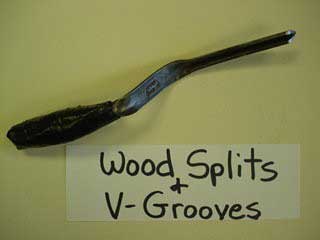
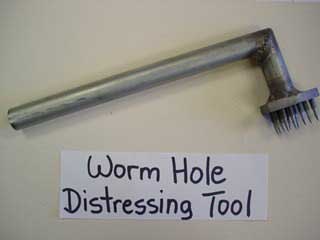
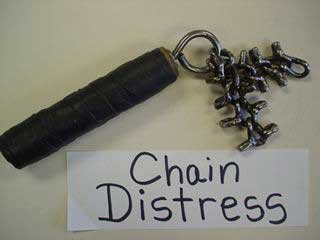
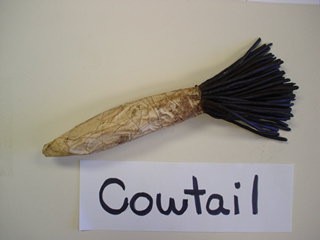
Here is a tool below for making wood splits and v-grooves. Also below is a tool for worm-hole distressing, and a tool for chain distressing.