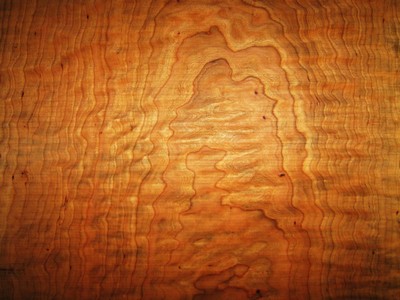
Performance Issues with "Roasted Birch"
The process of heating wood to 300°F takes a toll in terms of strength, durability, and workability. December 9, 2008
Question
I'm currently estimating a job that is calling out roasted birch cabinetry. Does anyone have experience with this wood and its characteristics, i.e. color, finishing properties, workability, waste factor?
Forum Responses
(Cabinetmaking Forum)
From contributor C:
This outfit has it: westwindhardwood.com. They seem to be saying it is a mix of yellow birch and other stuff, all of which has undergone a smoking process. "The look of walnut at half the price."
From Professor Gene Wengert, forum technical advisor:
I am concerned that the heat weakens the wood. Further, fasteners may not have as much strength; if so more and larger fasteners would be necessary. I have not seen independent strength testing. I also think that glue joints will not be as strong. It will be interesting how this material sands and also if the dust presents any special concerns.
From contributor R:
Looks what they have done is stopped just short of turning it into charcoal.
From Professor Gene Wengert, forum technical advisor:
The idea of heat treating of both dry and wet wood was done by the US Forest Products Lab in Madison. Dry wood was done around WW II and they used to have a floor in the lobby made of such wood. In the 1970s they patented a drying process using the high heat and that turned the wood a dark color.
After reading a recent article, it is clear that the strength loss items including fasteners and gluing can be rather large, as I stated, and as was noted by the US FPL years ago. I did not see anything about the toxicity of the dust, but I would bet it is worse than untreated wood.
From contributor A:
I used some roasted maple from eastern Canada for some stair treads not long ago. Gluing is an issue - it's the first time I ever had joint failures with PVA glue! I then switched to polyurethane glue, and longer clamping time, which seems to work much better. It machined really well and I had no more waste than conventional maple. (They use soft maple for the roasting process.)
From contributor R:
I assume the dust would be finer, which would be worse, but the torrefied wood should have less chemicals and tars, as to some degree they have been driven off. If it was truly smoked or fumed, I assume the probability of chemical toxicity would be greater.
From contributor M:
Does anyone know how much different this is from kiln drying?
From Professor Gene Wengert, forum technical advisor:
Kiln drying is done at no hotter than 180 F for hardwoods (often 150 F maximum). The process referred to here operates at over 300 F.
The comments below were added after this Forum discussion was archived as a Knowledge Base article (add your comment).
Comment from contributor W:
We have done several projects in San Diego with roasted hardwood. It is mainly soft maple. It machines very well if done in one pass. If the material is surfaced before running through the moulder it is very difficult for the feed rollers to get a grip on it. It finished very well also, the surface is like glass. It does produce sawdust vs. a planer shaving though and is quite messy to deal with and the resultant product smells like you didn't open the fireplace flue in the house. Gluing is an issue as well and because the material is brittle from the high temperatures it tends to split when being nailed.
Comment from contributor A:
I'm an amateur woodworker. I used roasted birch for a set of occasional tables and added a natural maple spline to the table top and it made for a terrific contrast. As for the product itself I found many of the same characteristics alluded to in earlier reviews. The wood can be very brittle and I would caution against the use of fixtures. I had no difficulty gluing, however polyurethane glue might offer greater durability. This product was light on my tools and relatively easy to sand; more enjoyable than my first experience with walnut. I finished the tables with 100% linseed oil which brought out dramatic and pleasing shades of purple, black, and brown.
Comment from contributor B:
I have used roasted, birch, poplar, and maple for picture frames and also 1 1/2" roasted maple for a kitchen counter top. You should use a dust mask when cutting or sanding. I used poly glue for the counter top and yellow glue for picture frames and case work with no problem. A longer clamping time is a good idea, and used wipe on poly (several coats, as the burnt wood sucks it in like crazy). The finish looks a lot like walnut, very warm and quite beautiful.