Question
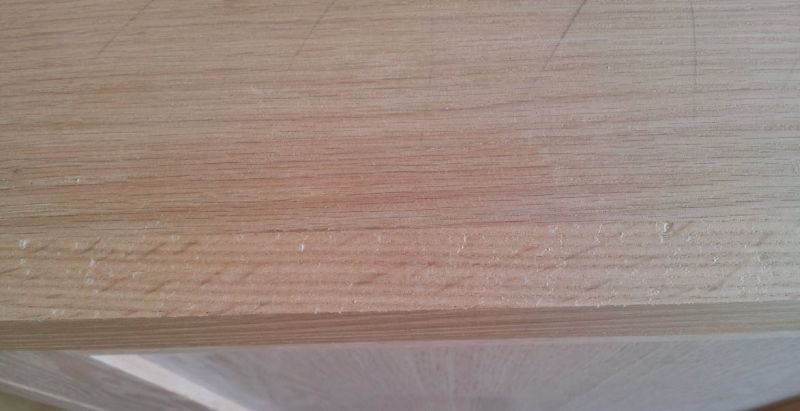
I'm staining cabinets for a house with a ML Campbell wiping stain. Staining the sheet goods is fine but the solid wood is a different subject with a lot of black blotchiness. According to the can, no sealer is necessary or recommended. Any hints as to how to overcome this blotchiness?
Forum Responses
(Finishing Forum)
From contributor I:
The fir, as with many softwoods is going to be prone to blotching with most stains. If there is an opportunity to start over you can use one of their microtone products under the stain, which helps or you can try one of the time tested methods like glue sizing, per conditioning, and etc to reduce the blotching. The hard part is if you already started the process on the actual project. If you are preparing test samples you can make the adjustments now. If it is too late remember that for the next job. In the future look into the ICA CNA spray stains. They are excellent on soft woods.
The boxes all stained nicely and then I started in on the doors. The first door I started with blotched so bad it looked horrible. Since the cabinet boxes were already stained, I couldn't change the schedule and use different steps/products to avoid the problem. I had to use the same stain.
So what I did was seal the doors with a washcoat of vinyl sealer, stained them, and sprayed a coat of sealer. Because the washcoat partially sealed the wood, the stain didn't soak into the wood as much and the color was lighter.
To add more color, after sanding the sealer smooth, I added a little of the stain to some highly thinned finish and sprayed on a very light, even wet coat. Using the stain as a toner kept the color the same and made it as dark as the cabinet boxes. Right after the toner flashed off, I sprayed the topcoat. The color was more even on the doors than it was on the boxes, but it looked good and no one besides me ever noticed.
Make a Washcoat to Eliminate Blotching
As it turns out, the painting contractor that did the millwork is going to do the finishing so everything will match and I don't have to match them but with different products. I've worked with them a lot so it should be fine. I'm way behind schedule on this and the contractor is getting a little upset. It's his own house and as about 60% of my work is with him, I need to keep him happy! This has definitely been a learning experience though.
Comment from contributor J:
My father was a painter's apprentice back in the 1920's. I was once building a pine chest for a client who wanted it stained and I called my dad to see if he have a remedy for blotching on various woods like pine, maple, birch, and etc. His solution was to take a quart of beer and pour it in a bowl, let it go flat, coat the piece to be stained, let dry and lightly sand with fine paper. The minute solids in the beer fill the irregular grain holes and even out the stain. When he first gave me this advice I thought it was a joke until I tried it and it works better than anything else that I have tried since.