Today's
Sponsors:


Elias Woodwork & Manufacturing

Endeavor Hardwoods

Erecta-Rack

ETK International

EX-FACTORY

Excel Dowel and Wood Products Inc.

Extrema Machinery

FastCap

Felder USA

Festool

Finish Systems

Firth Maple Products

Flap-Wheels.com

FormWood Industries

Freeborn Tool Company

Freedom Machine Tool

Fuhr International

Fuji Spray

Gary M. Katz

Goby Walnut Products

Graco, Inc.

Great Lakes Kiln Drying Association

GreCon

Green Valley Wood Products

GUHDO

Hanson and Leja Lumber Company

Hardwood Council

Hardwood Store of N.C. Inc.

Heartwoods, LLC

Hendrick

Her-Saf

Hermance Machine Company

Hi-Knoll Cedar, John Langstroth Consulting

Historical Plus Wood

Centre for Advanced Wood Processing

Charles G.G. Schmidt Co.

Chicago Dowel Company, Inc.

Classic Designs by Matthew Burak | tablelegs.com

Clear Lake Lumber

Clear Vue Cyclones

CNC Parts Dept.

CNCROUTERSTORE.com

Colonial Saw

Construction Programs and Results

Cook's Saw Mfg.

Coulee Region Hardwoods

Country Saw & Knife, Inc.

CP Adhesives

CSH Custom Service Hardware Inc.

Cutlist Plus

Cutting Edge CNC

Delta Power Equipment Corporation

Denray Machine

Digital Wood Carver

Dispoz-A-Blade

Don Hall & Associates

Donald Dean and Sons

Eagle Bay Cabinet Doors and Drawers

Eagle Machinery and Repair Co.

Eagle Mouldings

ECabinet Systems

Edge-It Edgebanding

Electrophysics


Retarding Lacquer Dye or Stain Drying

      Dye solvents tend to be fast-drying, and it's hard to get them to work with hand application methods. December 6, 2011

Question
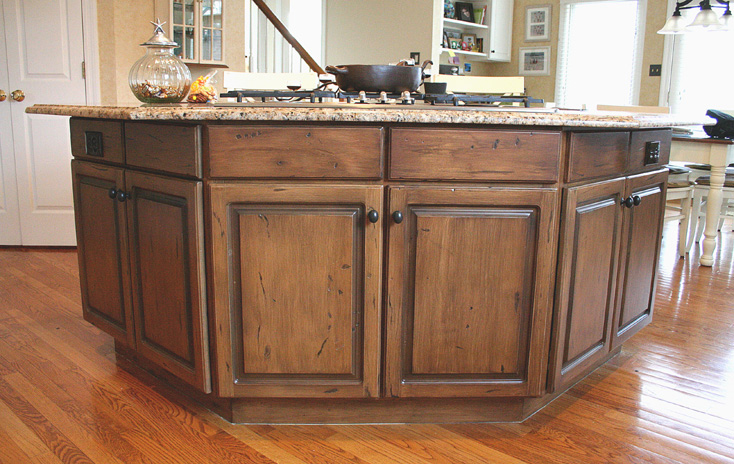
What chemicals, thinners, or extenders do you recommend for extending the drying time and the workability of lacquer dye stains? We are doing antiqued passage doors. We first seal the wood with tung oil, let dry overnight, and then hand apply the lacquer stains with a rag working it into the cracks and corners and then wiping it off. We then top coat with tung oil. It is working ok, but the lacquer dye dries a little too fast some times.

Goals:

1. Slow the drying time down of the lacquer stain.

2. Increasing the workability by hand.

I’m looking for specifics on the chemicals.

Forum Responses
(Finishing Forum)
From contributor J:
Do you have a photo of the look you are trying to achieve? Sounds to me you might like a glaze better than a stain, but I really don’t know the look you’re going for - just guessing at it. By adding a retarder to the stain you will also reduce its color intensity and viscosity. It may then be actually more difficult to apply. Try a sample with some retarder and see how it works. Like I mentioned above, I suspect you might prefer a glaze.


From the original questioner:
Does anyone have experience diluting a lacquer stain with MEK or Toluene? How safe are these? I will be using Mohawk heavy body glaze later in the process but for this step the main purpose is to take the cherry and give it a warm, rich, medium, and slightly orangish brown without obscuring the grain or making it muddy. I’m looking for things that can be wiped.


From contributor J:
Why not just use a regular wiping stain? Why the tung oil as a first step? You would be fine adding MEK or Toluene, but MEK is a very fast evaporating solvent and will speed the drying time. I would try the Toluene, or better yet, consult the stain manufacturer and ask what they recommend.


From contributor L:
If you add toluene to a lacquer based stain you will soon have a bucket of tapioca pudding. Use lacquer thinner, butyl cellosolve, or N butyl acetate.


From contributor R:
Mohawk has a dye stain retarder/reducer that you may want to try. However, it is my experience that dye stains are best sprayed, not hand applied. Also, the dye stain is usually applied first.


From contributor F:
Contributor R has the answer. Dyes that are reduced in a fast solvent such as acetone or lacquer thinner dry too quickly for wiping and are designed to spray in a reduced form directly on the bare unsealed wood. Adding a retarder might help a little but I would not want to do this on anything very big.


The comments below were added after this Forum discussion was archived as a Knowledge Base article (add your comment).

Comment from contributor O:
I have been finishing for over 12 years and found that mixing clear base stain or even better mineral spirits with the dye works the best for hand workability. Just add a little at a time to the dye to reach your desired goal. Spray the mix on and then use a rag to wipe it off. It works better that dipping it in the solution and then wiping it on.


Would you like to add information to this article?
Interested in writing or submitting an article?
Have a question about this article?


Have you reviewed the related Knowledge Base areas below?
  • KnowledgeBase: Knowledge Base

  • KnowledgeBase: Finishing

  • KnowledgeBase: Finishing: General Wood Finishing


    Would you like to add information to this article? ... Click Here

    If you have a question regarding a Knowledge Base article, your best chance at uncovering an answer is to search the entire Knowledge Base for related articles or to post your question at the appropriate WOODWEB Forum. Before posting your message, be sure to
    review our Forum Guidelines.

    Questions entered in the Knowledge Base Article comment form will not generate responses! A list of WOODWEB Forums can be found at WOODWEB's Site Map.

    When you post your question at the Forum, be sure to include references to the Knowledge Base article that inspired your question. The more information you provide with your question, the better your chances are of receiving responses.

    Return to beginning of article.


    Refer a Friend || Read This Important Information || Site Map || Privacy Policy || Site User Agreement

    Letters, questions or comments? E-Mail us and let us know what you think. Be sure to review our Frequently Asked Questions page.

    Contact us to discuss advertising or to report problems with this site.

    To report a problem, send an e-mail to our Webmaster

    Copyright © 1996-2012 - WOODWEB ® Inc.
    All rights reserved. No part of this publication may be reproduced in any manner without permission of the Editor.
    Review WOODWEB's Copyright Policy.

    The editors, writers, and staff at WOODWEB try to promote safe practices. What is safe for one woodworker under certain conditions may not be safe for others in different circumstances. Readers should undertake the use of materials and methods discussed at WOODWEB after considerate evaluation, and at their own risk.

    WOODWEB, Inc.
    335 Bedell Road
    Montrose, PA 18801

    Contact WOODWEB


  •   Home » Knowledge Base » Knowledge Base Article