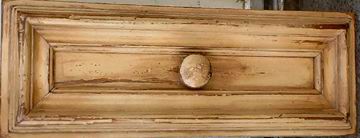
Sand-Through Finish Using Two Water-Based Stains
It's unusual and tricky, but here are some ideas for accomplishing it. March 12, 2006
Question
I have a client who wants a pine entry hall bench, solid color stained. She also wants the finish distressed. I will be working with water base stains. In addition, she wants to know if a dark color stain can be put on as the first color and a second different colored stain can be put over the first one. Her idea is to spot sand through the first stain color to reveal the darker stain. I know this can be done with latex paints, but I don't know if this is possible using two different colored stains.
Forum Responses
(Finishing Forum)
From contributor A:
I wouldn't use water based on pine. You may have to seal the wood before the first coat is applied to keep it both from blotching and penetrating too deeply if you are going to try to sand it. I would layer on dyes to achieve the desired effect.
From contributor L:
Apply the lighter stain first. Then put a thinned clearcoat over the stain. Then do the rub through. Apply the darker stain on the rubbed spots. When you get the right look, finish coat the project (two or more coats).
From contributor C:
What you describe is called a rub though look and is done with paints (not stains). Any good quality opaque finish will work (CV, precat, post cat, etc.) but stains or glazes do not work. The transparent topcoat lets the base coat color show through and you get only half-toned effects. This look requires an opaque topcoat. You could use a stain for the base coat but you should use a clear intercoat in that case (otherwise you'll blow right through the stain to the wood when doing the rub-through). Do samples... Your customer might like a mixed stain effect. I recently did an office build out where we did a light walnut stain overcoated with a streakily applied semi-transparent gray stain on oak ply. The effect was quite attractive and had an appearance similar to what I think your client is imagining. Get a couple of the appropriate colored stains and try a few sample boards.
From contributor B:
Try the WB gel stains from General Finishes and the new hybrid WB/linseed oil stains from Target Coatings. Cool stuff!
From contributor J:
I just ordered some of the Target Coatings stain. How do you like it? I already use their Ultima Spray Lacquer and love it.
From contributor D:
Try this schedule:
1. Apply spit/seal coat (shellac, lacquer, vinyl...). I prefer shellac (amber).
2. Stain with preferred stain and color (remember the sealed wood may require either a darker stain to achieve the proper color or an additional coat).
3. Seal entire piece with your choice of sealer.
4. Sand through areas likely to receive wear over time to reveal raw wood.
5. Apply lighter stain in the scratched through areas.
6. Spot seal spots and apply additional sealer to entire piece.
7. Scuff sand and finish with desired topcoat.
You would never be able to scratch through one stain layer while preserving another. Sandpaper is an indiscriminate tool, it scratches everything, it can't differentiate between brown mahogany and chestnut.
I've done this finish several times. I don't particularly care for it. But who am I to judge? In my opinion, this finish is best when used in tandem with an opaque finish, as mentioned in previous posts.
From contributor Y:
Fuhr makes a water based glaze that would work very well for what you are doing.
From contributor B:
My procedure varies from job to job. Usually I preseal with shellac, then apply a base color with the Oxford Ultima-WR Stain reduced by 10-20%, check for any grain issues, then apply a second coat. Seal again and tone with transtints or reduced Ultima-WR in one of my WB topcoats. I'll touch up sand throughs with Transtints.