Question
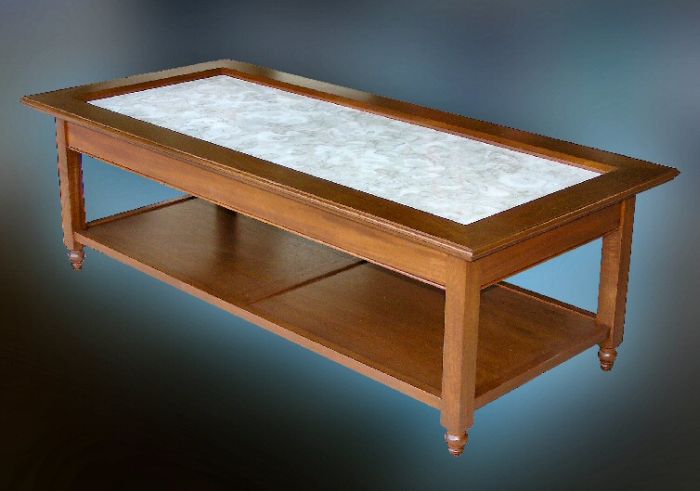
We're a two man cabinet shop and have a customer that wants us to make her a couple of coffee tables for her porch, the rails of which are Spanish cedar - she wants them to match (she decided against ipe, which is what the deck is made of, to our delight). We don't use Spanish cedar much, being a cabinet shop. Seems like it would be too soft for a table surface. Is there a harder alternative that will closely resemble it? We thought of mahogany, but it's one arm, one leg per board foot compared to cedar right now. By the way, would you finish this with spar, since it will sit on the porch (shaded from sun and rain fairly well), or would pre-cat or CV do the trick?
Forum Responses
(Furniture Making Forum)
From contributor M:
I use Spanish cedar for the linings of my humidors - and you're able to very easily scratch that species with just a thumbnail. It's not robust enough for furniture unless behind glass in a museum.
How about lyptus? Similar coloring, similar graining, much higher modulus of elasticity and rupture than Spanish cedar. Also should be one limb cheaper than mahogany per bf.
Spar is not any more waterproof nor appreciably any more UV resistant than regular varnish. It's got more long oils in the mix to promote flexibility more than anything else. In my experience it's got adhesion issues after just one season, meaning it'll need to be sanded/recoated every year and stripped entirely and refinished from the ground up about one season out of five.
I applied spar to a north-facing exterior patio door, located under a cantilevered overhang of my own house a few years ago and sorely wish I didn't. Maintenance is a bear, cosmetics are great for about 30 days, and then the bloom comes off of the rose. This summer it gets stripped and I'll be searching for another product.
Do heed contributor P's point about the sap weeping, though. Spanish cedar likes to unexpectedly weep sticky sap out of some boards. That'll positively play hob with a finish. So be very discriminating with board selection if you do end up using this species. (I still think lyptus should be considered instead... but hey, that's just me.)
Comment from contributor D:
I've just finished milling about 1000 bf of Spanish cedar for a pergola that I designed. What I learned is that it varies in density and color as widely as any wood I've ever seen. That explains the soft and hard perceptions of the wood if the user has only worked with small quantities. Overall, I like the wood. It tools nicely and has a short grain structure much like mahogany.