Storing Wood in an Unheated Building
Is kiln-dried lumber that has been sitting in an unheated shed still dry enough to use? November 27, 2006
Question
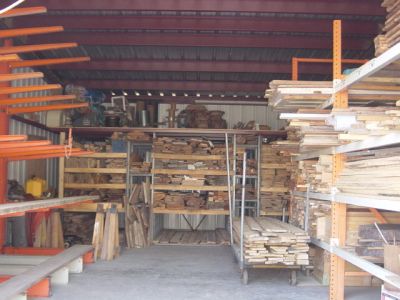
I have several hundred feet of hardwood oak, ash, mahogany, and maple currently in a metal building (the kind you normally keep your lawn mower in and other yard equipment). It's all been kiln dried. Is it okay to keep it in there permanently?
Forum Responses
(Sawing and Drying Forum)
From contributor D:
Now there's a real Wood-Mizer! Hording lumber, for good.
If it's already dried, stays out of rain and sun, sounds like a respectable place to lay to rest some lumber.
From contributor K:
You may want to treat the ground under it for termites, if you didn't when you built the shed.
From Professor Gene Wengert, forum technical advisor:
If the wood was kiln dried to 7% MC, which is common, now in your shed, it will or has regained moisture up to as high as 12% MC, unless you are in a humid area and then it will be higher. As a result, such higher MC will not be acceptable for furniture, cabinets, etc, until the MC is lowered back to 7% MC. There is a small risk of powderpost beetles.
From contributor B:
Dr. Wengert, I have a similar situation - 20x35 metal building, uninsulated/unheated. Am I correct that the gain back to 12%+- is a gain of free water and as such, is much easier to tack back to 7% if put back in the solar kiln a few days?
From Professor Gene Wengert, forum technical advisor:
It is actually bound water, but is easy to remove. If you can add about 10-15 degrees of heat to the building, you will achieve a good storage condition. Measure the RH to be sure. Target is 38% RH.
From contributor B:
It is a metal building and it gets plenty hot in there on these summer days - 110-120. That should do it in the summer, if I understand what you are saying.
From Professor Gene Wengert, forum technical advisor:
Install a small fan to blow the heat down from the ceiling. It will work year round. Check the RH using a $25 sensor from Radio Shack.
