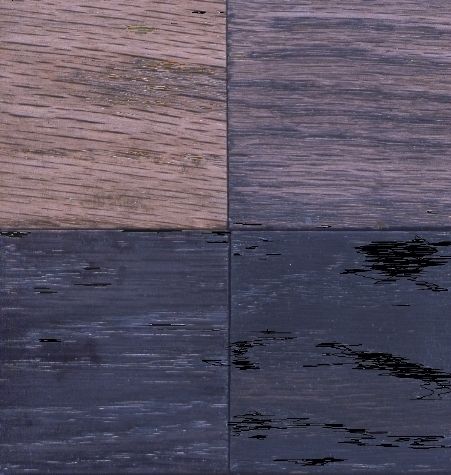
Tung Oil Tips and Tricks
Advice on tung-oil-based "home brews," and more. November 12, 2006
Question
Is it advisable to put a coat of tung oil on a project to pop the grain, and then finish over it with shellac?
Forum Responses
(Finishing Forum)
From contributor R:
I wouldn't use tung oil by itself as it can take a long, long time for it to dry out hard enough to finish, as it doesn't actually cure. When it is by itself, it just dries. And some finishes have a hard time adhering to plain oil, cured or not.
When I am after a good grain pop for a specific piece, I use a home brew of 1 part 3# shellac, 2 parts anhydrous alcohol, and one part tung or BLO. That was a recipe given to me years ago by a cabinet man that hand finished everything. It is thin and applies nicely with a rag and you can see what you will get right away.
If you use tung oil in the mix, wait a day before finishing. If you use BLO, you can start in about 6-8 hours. I have put NC lacquer, spar varnish, you name it over that stuff and it works great.
From the original questioner:
Is anhydrous alcohol another term for denatured alcohol? Have you ever heard of catalyzing tung oil with mineral spirits so it dries fast and hard? I just read something to that nature.
From contributor M:
In regard to 100% pure tung oil - you wipe it on, allow it to soak in, and then you wipe it off.
1- Anhydrous alcohol, is pure 100% alcohol, it contains no water.
2 - Mineral Spirits, is the solvent for tung oil, it only will thin it out, it will dry faster with less build, If you wiping it on and then off with the mineral spirits added, you will need more applications in most cases.
3 - You might want to try this "old time" formula, it’s similar to most commercial "oil finishes".
1 part - Pure Tung or Boiled Linseed Oil
1 part - Naptha or Mineral Spirits
1 part - Polyurethane or Vanish
This is a user friendly formula that you can adjust these chemicals to the type of work you are going to do.
As an example: BLO dries faster the pure tung oil, and Naptha dries faster then Mineral Spirits, and "generally" Polyurethane will dry faster then Varnish. As with all new materials you need to do some practicing and testing to see what works best for you.
From contributor P:
Sutherland Welles makes a wiping varnish with a high tung oil content. It dries very fast (well 24 hours) and is very hard. I have sprayed Lacquer and conversion varnish over their oil stains with good results. It's my finish of choice when not using a spray gun. It is expensive, but so are stripping and sanding errors.
From the original questioner:
I'm just making sure that it can be done with good results. I would hate to make my samples and think they are fine and a couple weeks later the evil shows itself to me after I used it on the piece.
From contributor R:
I agree with what Contributor M said - especially the part about trying what is best for you. There are a million recipes out there, a lot of them fine tuned by someone to get exactly what they want. The recipe I posted is really to seal the grain and pop out what you can, but it isn't a final finish. It is a great conditioner and sealer, but needs something on top of it.
On the other hand, there are those that generally follow Contributor M's recipe for the full finish using the same formula for sealer and conditioner. Tried and true, it is used by some as a build/final finish for them and they put on several coats to achieve their desired amount of protection.
From contributor B:
I agree with all the responses but must add that there is nothing that will 'pop' the grain more than a good quality of shellac flakes dissolved in top quality ethanol. Actually, there is a shellac product called Gold Dust that is like dust but is pure shellac. It dissolves almost before your eyes.
From contributor M:
To contributor B: That's debatable, and could be a personal choice. I personally prefer a diluted stain. In fact, almost any coloring medium that will add a little color to the wood will bring out the features of the wood like the grains, figuring and most other characteristic markings.
From contributor B:
It’s true than staining will bring out (contrast) the grain - pigmented stains not so well as dye stains due to the characteristics. However, what I was referring to was the suggestion made in one post of tung oil popping the grain. As you stated there are many things that will do so although I consider stains as contrasting the grains, just different terminology which unfortunately too many folks get into debates over (the terms). Comparing grain popping (such a technical term), shellac will enhance more than the tung.
From the original questioner:
It seems that there are so many options to choose from it can be a little daunting. I was referred to Sutherland-Wells as a source for tung oil, so I called them and talked to their advisor. She has concerns that the oil would not dry properly, and as a result, the shellac may delaminate. Not good! I'm not in a big rush so I could wait as long as needed. She recommends that I apply several light coats of the shellac, making sure I don't completely seal the wood, then apply the tung oil and wipe it off fairly quickly to seal and to protect the shellac. Is this something that you guys would recommend? How much of the amber tone am I going to lose by doing that? Will this make it more difficult to do future repairs if necessary? Maybe I should take the tung oil out of the equation altogether, but if so, I feel that I may lose a portion of the final look I am trying to achieve. Does anyone have any thoughts?
From contributor M:
I don't want to harp on this, but "pure tung oil" is a slower drying oil, so it will take longer for this oil to dry before you can go on to the next step. Whereas, BLO, or the wiping varnishes, which are some times called the "Oil Finishes" will dry faster because they contain metallic driers.
This is why some finishers prefer a coloring medium which will add a little amount of color, and it will dry in one hour, and then you’re on to your next step. Good Luck, and be sure you make up your own samples.
From the original questioner:
The tung oil they sell is a polymerized tung oil. So to make sure I understand you correctly - are you suggesting that I use an aniline dye or an earth pigment added directly to the oil? I don't have a problem with that since I am planning on layering on my colors anyway. It seems that I have read about problems occurring sometimes with BLO, which is why I really haven't considered it.
From contributor M:
You can do it either way - add it to the oil, or apply it in a thinned out stain. Just as the tung oil or BLO has a 'tint of amber color,' you can do the same with a stain. All you need is very little color in the stain. Allow it to dry and then clear coat it. If you want to "layer other colors" as another stain, glaze or shading stain that's up to you.
The comments below were added after this Forum discussion was archived as a Knowledge Base article (add your comment).
Comment from contributor D:
I'd think you might want to drop the tung oil in this project and switch in some Danish oil, then shellac. You could spray finish or brush whatever coating you want on to the shellac. I use this process when finishing clocks and lacquer ends up as the top coat or in some cases just a couple more shellac coats. The idea of using shellac first is more for sealing grain so it won't blotch, and you would use a #1 cut for that. I'd still either stain or use Danish oil over the shellac vs. using tung oil.