Question
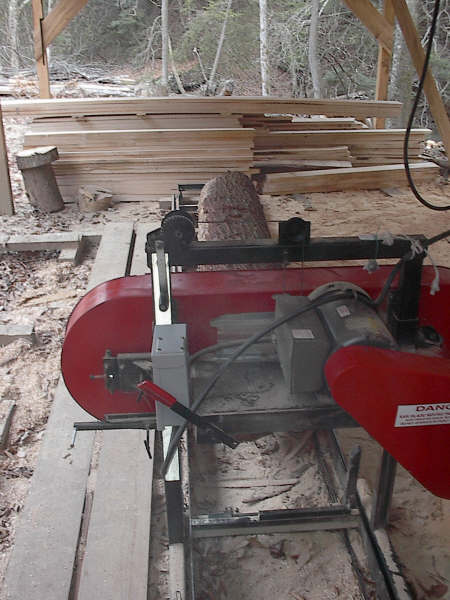
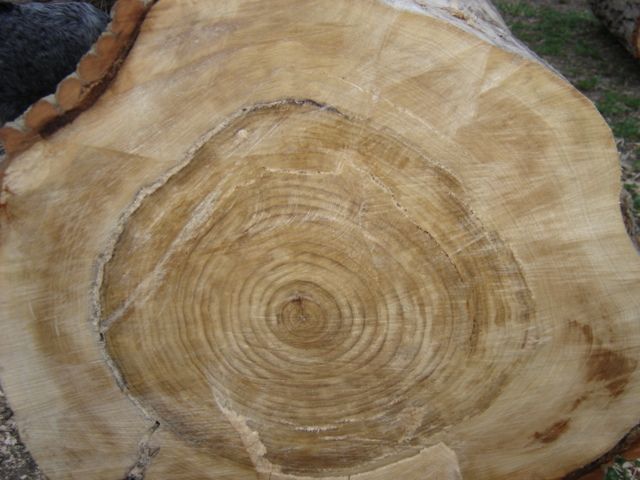
I have been milling Eastern cottonwood for a few weekends. Some of them show no shake, and some are like the picture. Will there be more separation as the wood dries, or is this the end of the problems? It's basically a throwaway when they're this bad, but I am able to get a couple of 2*12's out of a log like this. The lumber as-milled shows no problems. Curious as to other experiences. Many of the older buildings on this farm were made from cottonwood 2*X lumber years ago, and it's in good shape.
Forum Responses
(Sawing and Drying Forum)
From Professor Gene Wengert, forum technical advisor:
The shake results from anaerobic bacteria that reduce the wood's strength. They also cause wetwood at the same time, so the MC in these areas is often over 100% MC. In addition to shake, there will be a strong, foul odor and discoloration. Drying high quality is nearly impossible. It is common to find that the shake worsens a bit in drying, but not a whole lot.
The shake arises when the roots are damaged and the tree is in a wet area. The bacteria move about 1-1/2" per year up the stem, so we see it only in older trees. You will find more info if you do a search in the archives.
Cottonwood can be used for structural purposes, but it is not exceptionally strong. Hence, studs are okay, but joists and so on are questionable.
I did an archive search a while back, but don't remember seeing anything about windshake showing up after drying, so I got my question answered. Thanks.
The American Wood Council website lists cottonwood in the span and load calculator. I had planned on using those numbers.
"Bacterially infected wood, and this includes the wood in and around the shake area, is very weak, so the span tables would not apply except for wood that is not infected."
Does this mean a tree that is not infected, or to stay away from the infected area? As stated, a 2*10 cut from the jacket, or flitches from this lumber appears to be structurally sound, but they're green. If I get too close to this decay while sawing, the board will fall to pieces.
I have no formal inspectors to deal with. Could I lean the backhoe on a couple of these after they're dry, and mechanically grade them, as well as visually?